I know it might seem like a long time, because trust me, it felt like a long time (at the time), but our 30 days in Cambodia started and ended in the blink of an eye. It all began in Siem Reap back on 10 April, after we travelled on a long day bus from Bangkok to cross the Thai-Cambodia border, only to be stuck at the border for 3 hours, because of both Thai and Khmer New Year (wonderful timing by us). In all honesty, we didn’t really know what to expect from Cambodia. We knew that it would offer us new cultural perspectives, an education on Khmer history, and exploration of the largest religious site on the planet. However, we definitely didn’t know then what we know now about Cambodia, and that is the beauty of travelling!
DISCLAIMER: This blog is long. It took me hours to write. I recommend grabbing a glass of wine, or breaking it up and reading about each city in separate sittings. Or, just don’t read it at all. I’m just glad I got through it.
Siem Reap
We hit the ground running in Siem Reap, not only because we were running to escape the persistent splashes by the locals armed with water guns (more on that later), but because we had so much to see in such little time. On our first night, we squeezed in a visit to the infamous Pub Street lined with vibrant bars, restaurants, nightclubs and pubs, all promoting their respective “happy hours”. It was so beautifully decorated for Khmer New Year with locals performing traditional Khmer dances and songs. We felt that everyone’s spirits were high with the impending holiday, and enjoyed a 2-for-1 cocktail at a bar before heading to bed for our big day of temples!
Angkor Archeological Park: Ta Prohm, Prasat Preah Palilay and Phnom Bakheng
We purchased the three-day pass for the Angkor Archeological Park as we had been told by reputable sources (Aunty Bec and Lee Lee) that you simply cannot see everything in one day because it is so BIG. For those who are not familiar with Cambodia, the Angkor Archeological Park is a UNESCO World Heritage Site, stretching over 400 square kilometres, and containing the remains of the various capitals built and ruled by the Khmer Empire from the 9th to the 15th century. In turn, the famous Angkor Wat temple located within the park is considered the largest religious structure in the world. It is breathtakingly large, so intricate, and truly mind blowing.
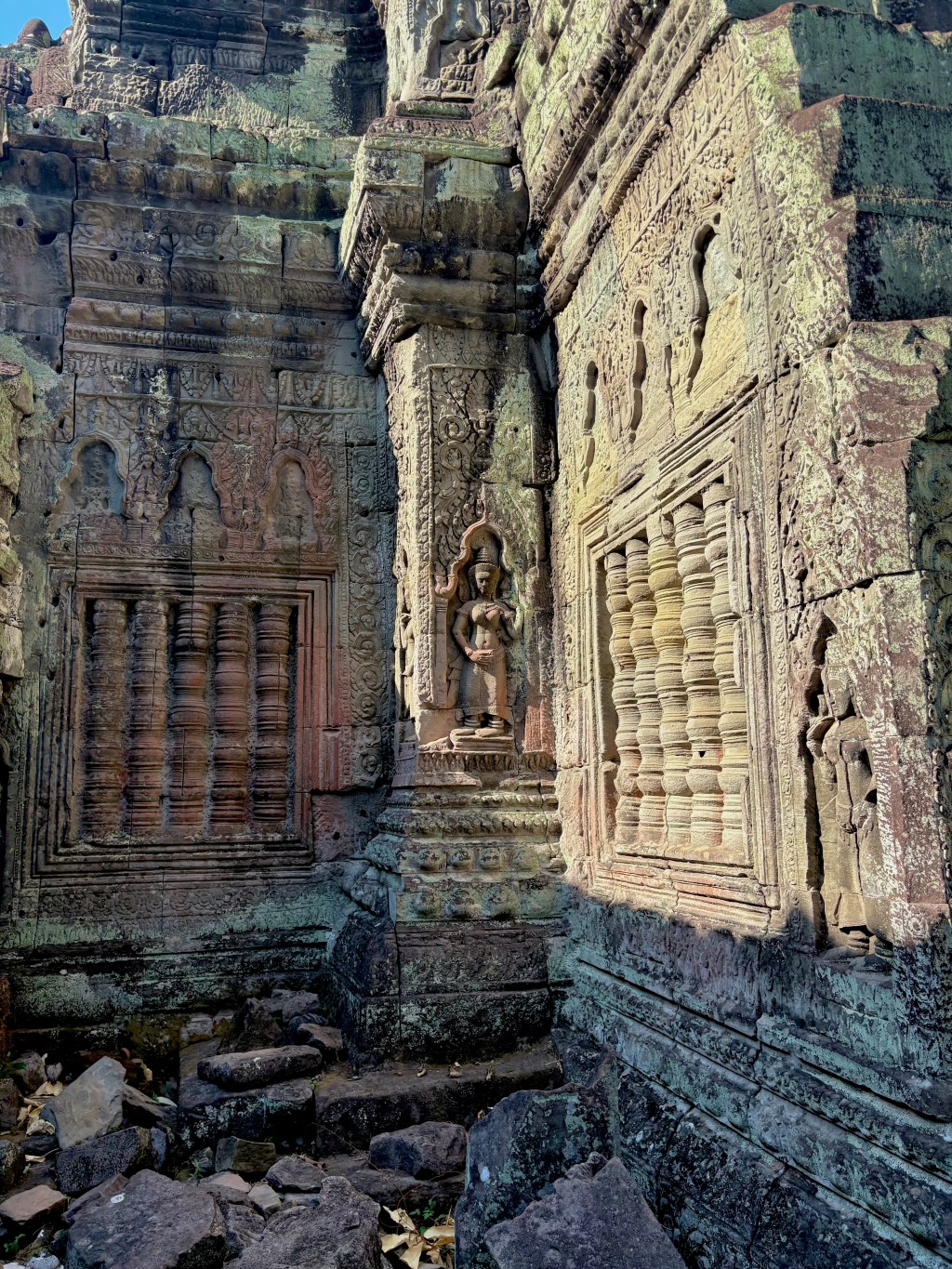
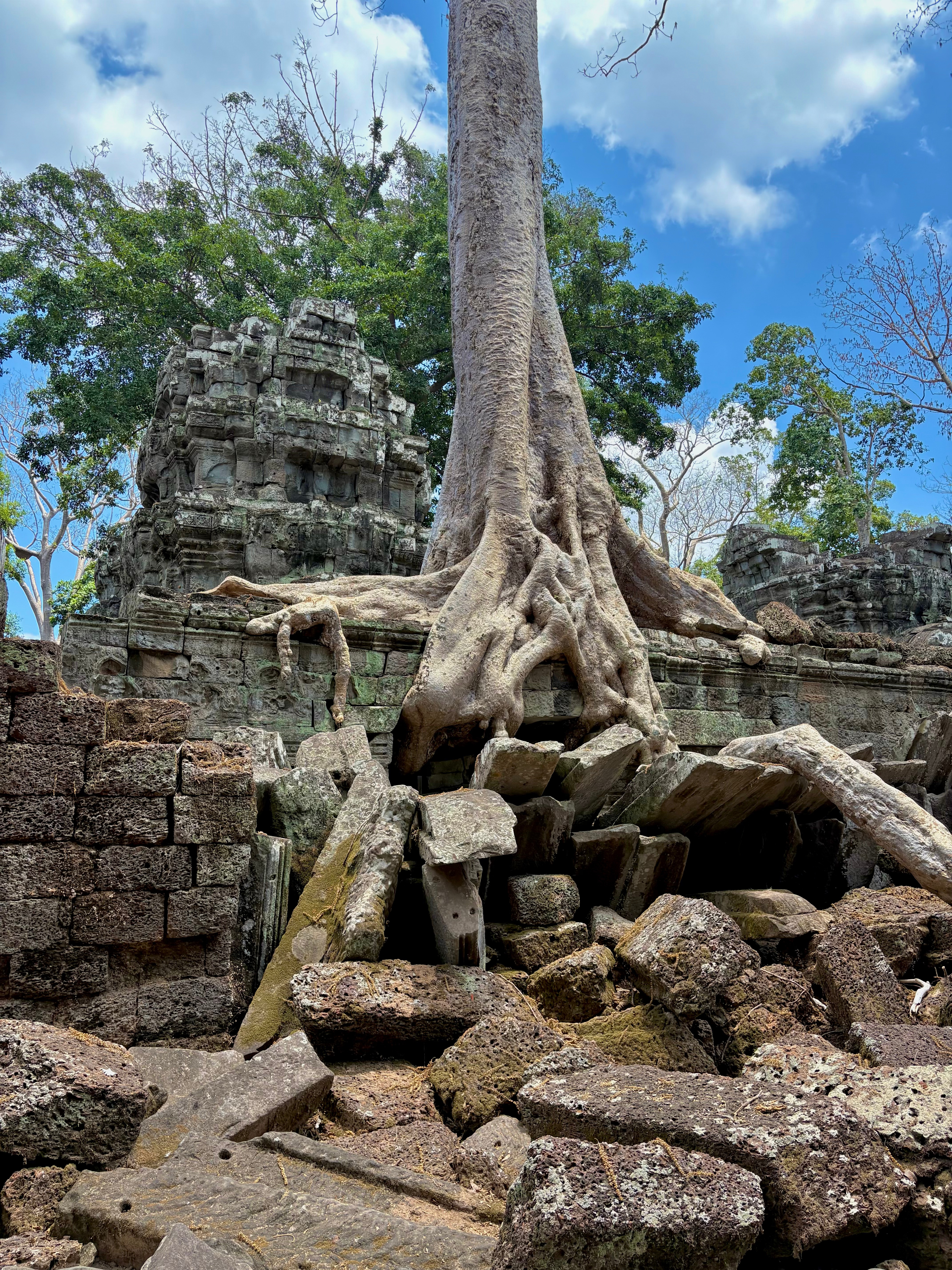
However, we didn’t actually visit Angkor Wat on our first day in the park… We had planned to visit for sunrise the next day. Instead, we rented a motorbike after breakfast and headed to the east side of the park. We started exploring some of the huge temples nestled amongst overgrown trees, their ruins preserved in the grassy, green parts of the park (this was mostly strategic, attempting to remain shaded in the 40+ degree heat). We started at Ta Prohm (AKA Tomb Raider Temple, for those Lara Croft fans). Much of the temple remains in ruins, left largely as it was when first rediscovered by Europeans, though key elements have been beautifully restored. Despite being our first Angkor temple, it ended up being our favourite. We spent nearly two hours wandering through its eerie, crumbling halls. We now know why it’s a must-visit!
After burning our bums getting back on the motorbike, we made our way to the southern entrance of the park and drove straight through the middle. We stopped at Prasat Preah Palilay, a small and ruinous Buddhist temple built in the post-Angkor era style (14-15th century onwards). It was slightly off the beaten track and we were the only tourists there. We found a spot under a tree and researched its history, before heading to our next stop: Prasat Preah Khan Temple. At its peak, it housed over 100,000 officials and servants, protected by the temple’s moat and fortified walls!
Our final stop of the day was Phnom Bakheng, a Hindu temple perched on a hill with sweeping views over Angkor and its surrounding plains. Built in the late 9th century, it’s the oldest temple in the park. Interestingly, many of Angkor’s earliest temples were Hindu, reflecting the dominant religion of the time. As Buddhism gradually gained influence within the Khmer Empire, many of these temples were converted or repurposed for Buddhist worship. Today, over 90 percent of the Khmer population practises Buddhism. Alongside hundreds of other tourists, we sat on the hill at Phnom Bakheng to watch the sun set over the park, as the towers of Angkor Wat slowly faded in the distance. Feet aching and covered in the red dust from the complex, we navigated our way through the evening traffic back to Siem Reap province and slept early for our sunrise trip the next morning.
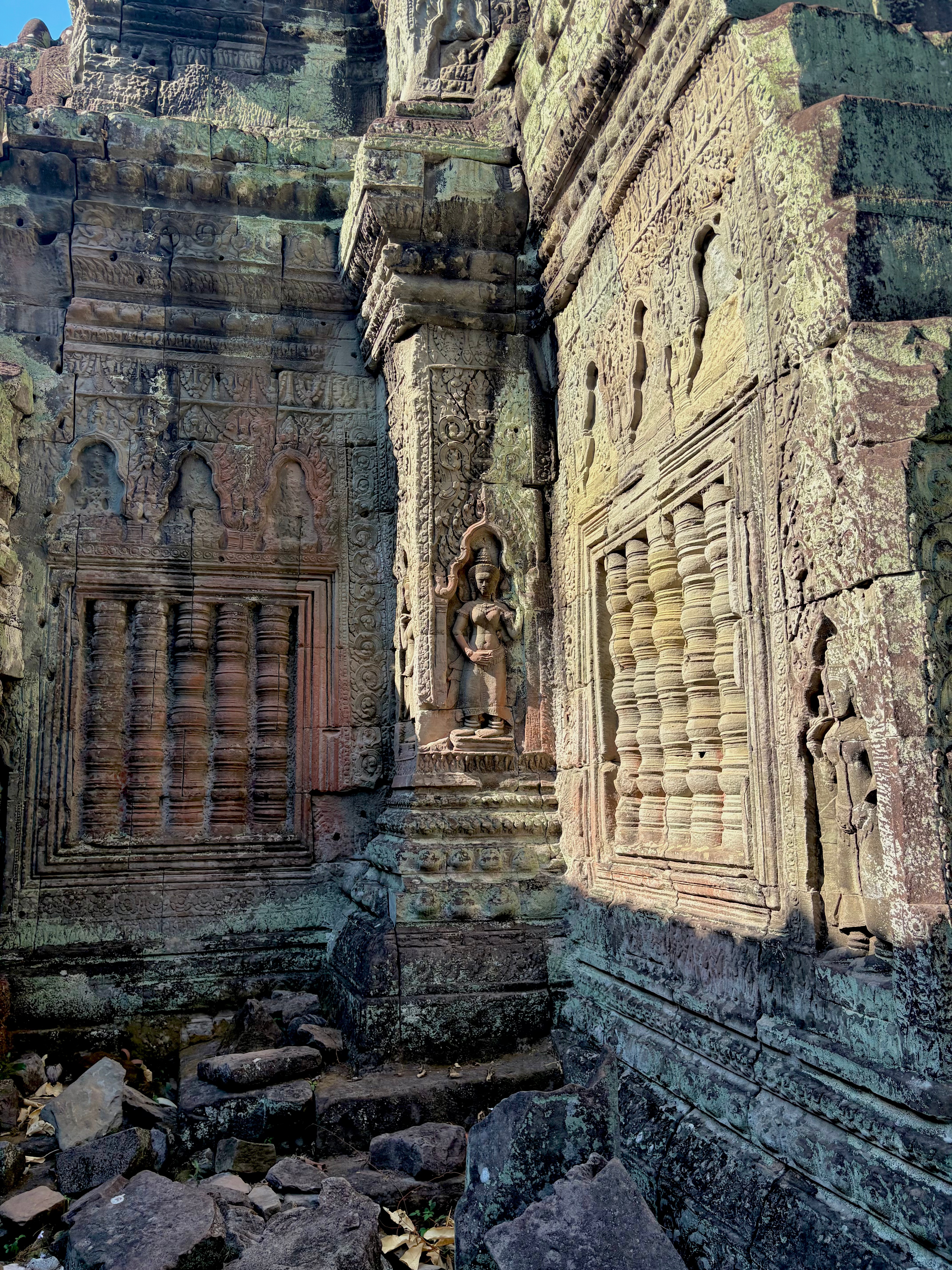


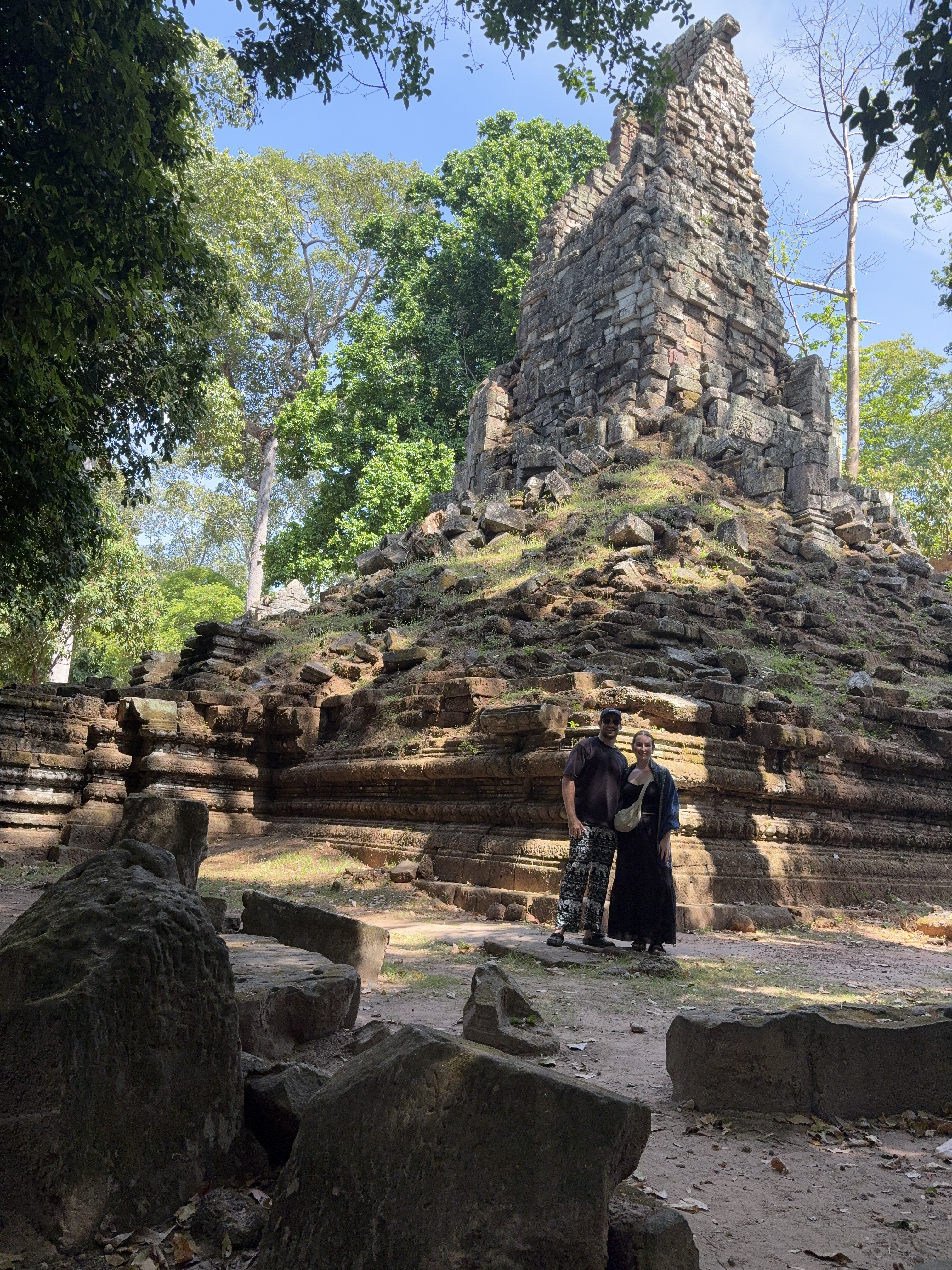
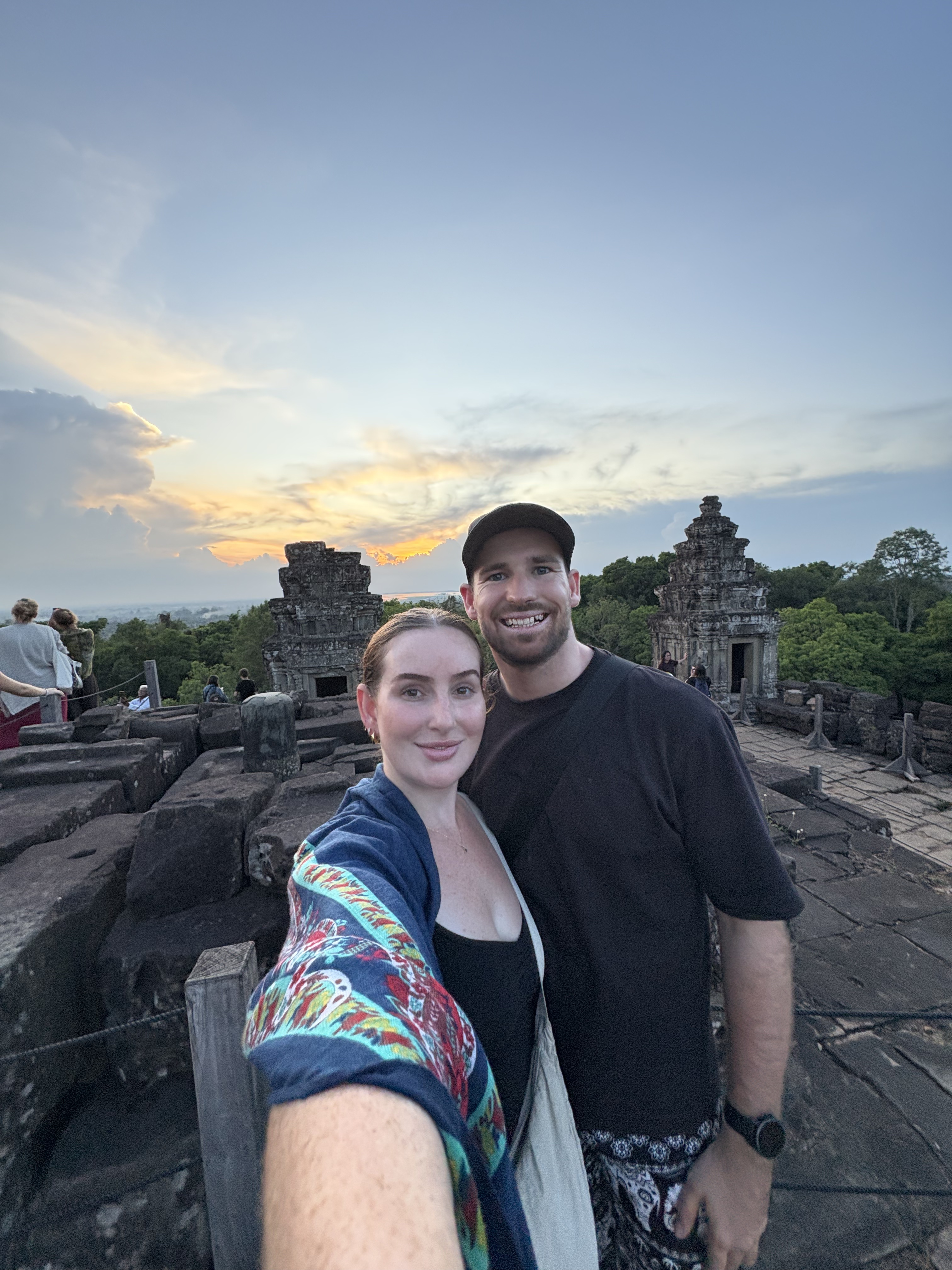
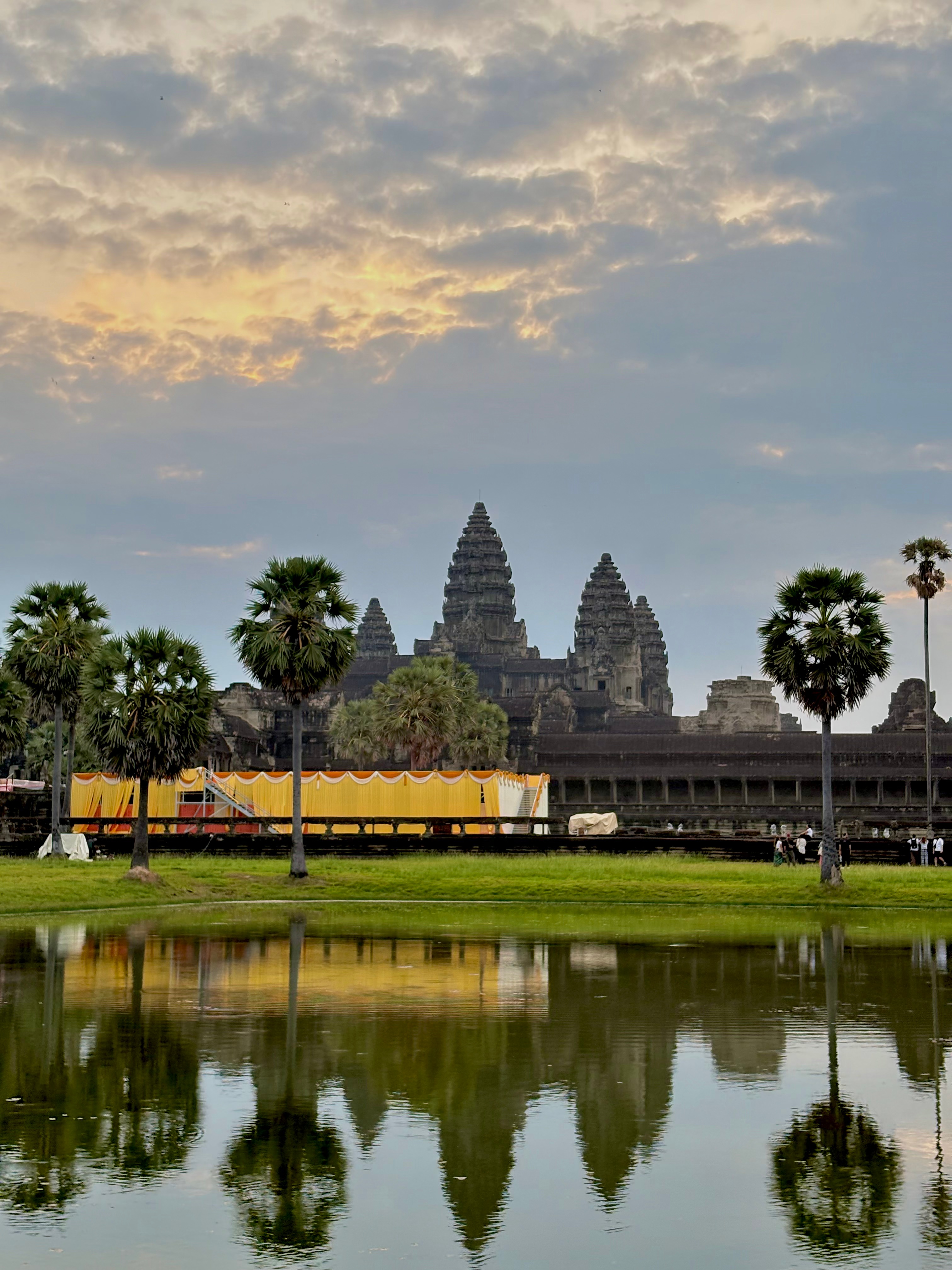
Angkor Archeological Park: Angkor Wat, Bayon, Phimeanakas, Prasat Khleang Khang Cheung, Terrace of Elephants, Terrace of the Leper King, and Ta Keo
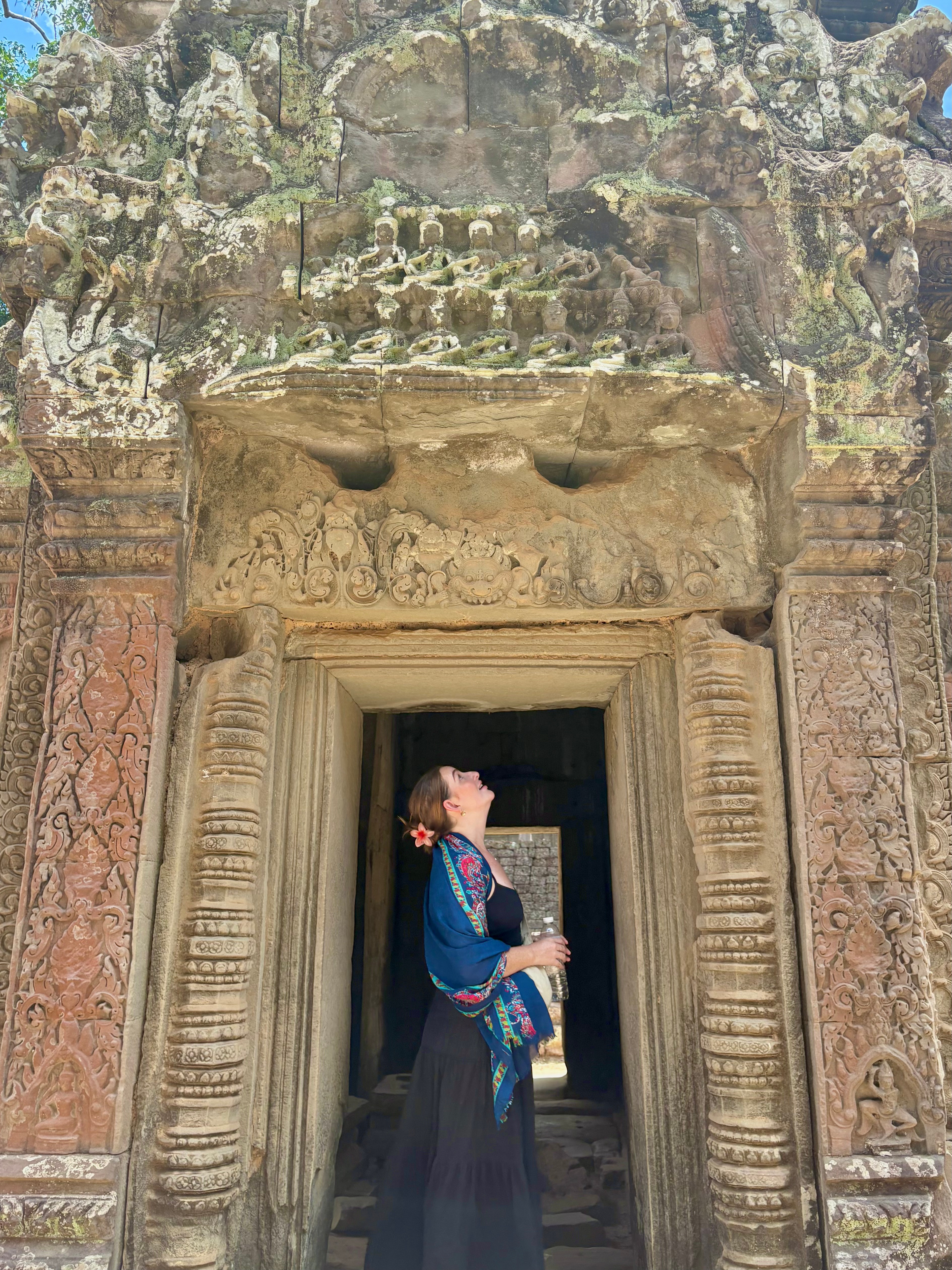
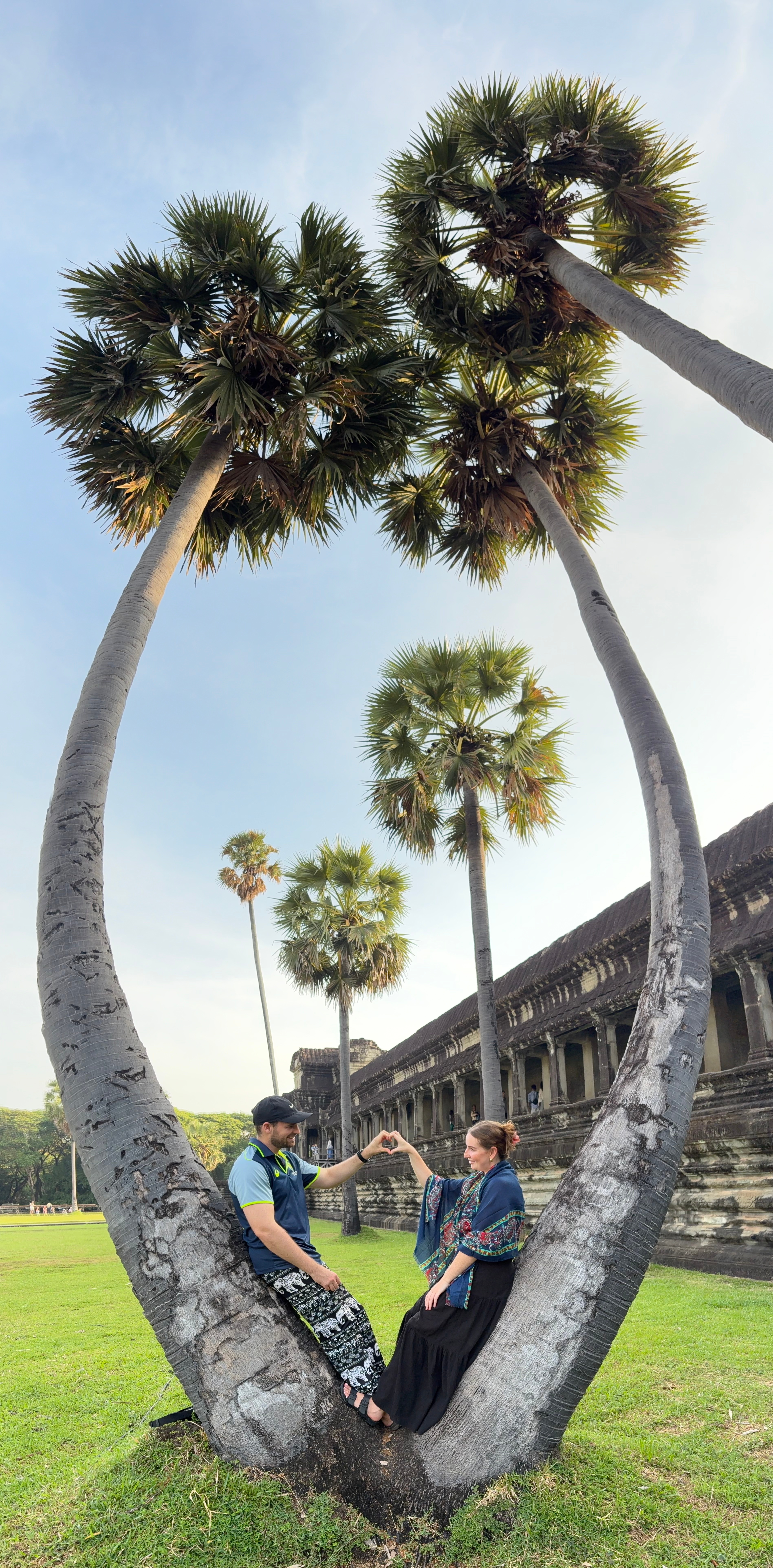
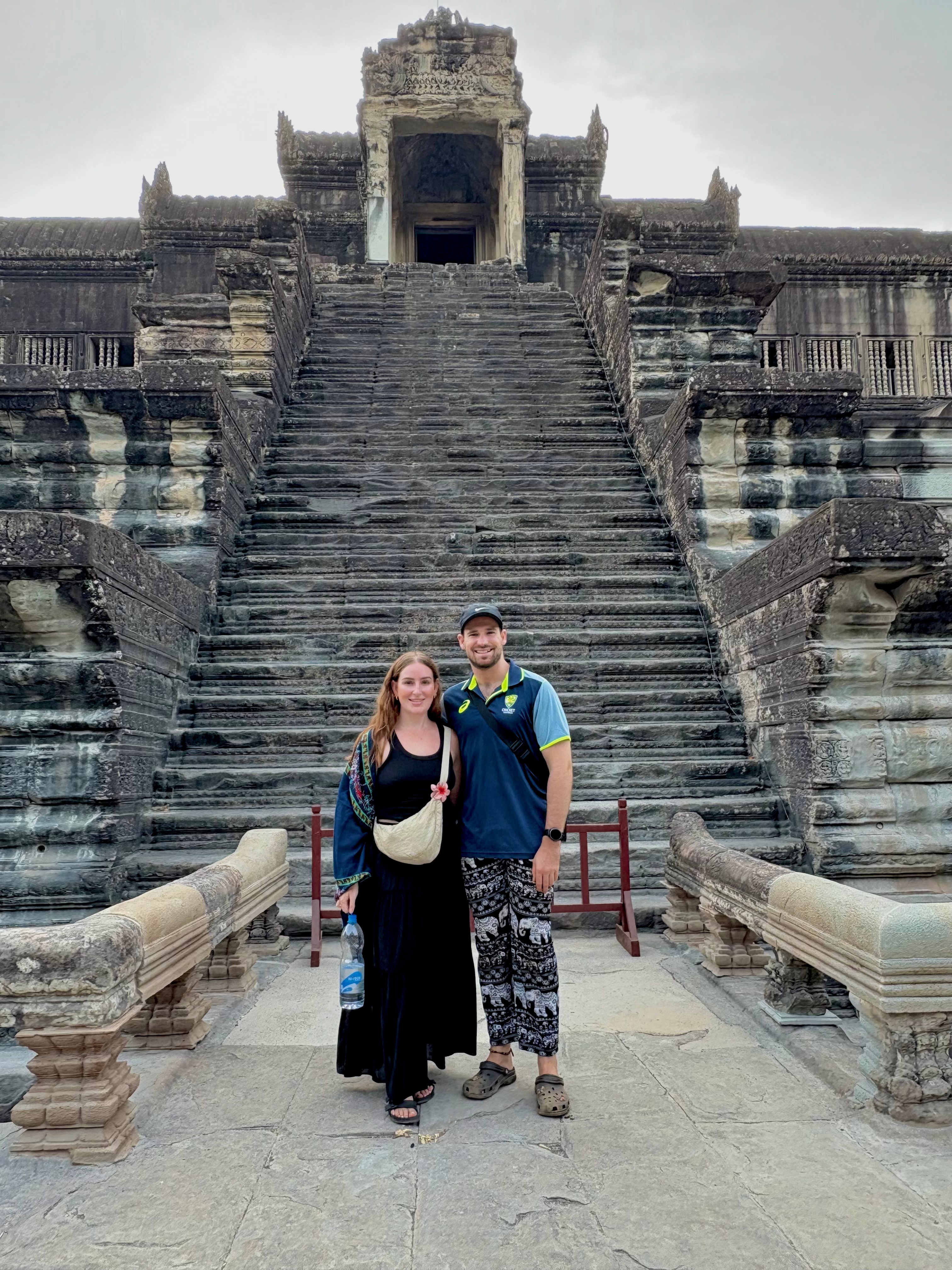
As if our second day couldn’t top the first, we ended up tackling seven of the park’s fifty temples under the sweltering Cambodian sun. We arrived at the park at 5:50am to catch the sunrise behind Angkor Wat, watching as golden rays reflected off the lotus pond in front. While we still had our trusty motorbike for transport, we decided to hire a tour guide for Angkor Wat to better understand the site’s history, architecture, and cultural significance. When you’re standing within the grounds, it’s almost impossible to fathom how the Khmer people built such an enormous and intricate structure, especially without modern technology. Its sheer scale is overwhelming: massive sandstone blocks transported from distant quarries, crazy high towers carved with ornate details, and kilometre-long galleries filled with elaborate bas-reliefs. It is INSANE. Angkor Wat itself was never fully completed, which becomes apparent as you walk through some unfinished hallways. It was one of the last monuments of the Angkorian Empire before its gradual decline. While Angkor Wat was never entirely forgotten, it stood isolated for centuries in dense jungle until it was “rediscovered” by Western explorers in the 19th century. Now, it is the most significant religious site in the WORLD!
Our next stops included the famous Bayon Temple, recognisable by the dozens of giant stone faces smiling down from its towers. Having been extended overtime by different rulers, the structure felt a bit clunky and maze-like, but that only added to its charm. We made quick stops at Phimeanakas, a royal temple once used by the king, and Prasat Khleang Khang Cheung, thought to be a storage or ceremonial site. We wandered along the 350-metre-long Terrace of the Elephants, a long viewing platform once used for royal events, and the nearby Terrace of the Leper King, lined with carvings of mythical figures that seemed to appear out of the stone as we walked past. We ended our long day at Ta Keo, a massive but unfinished temple made of bare sandstone. Legend says work stopped after its tower was struck by lightning! After that, we were well and truly done.
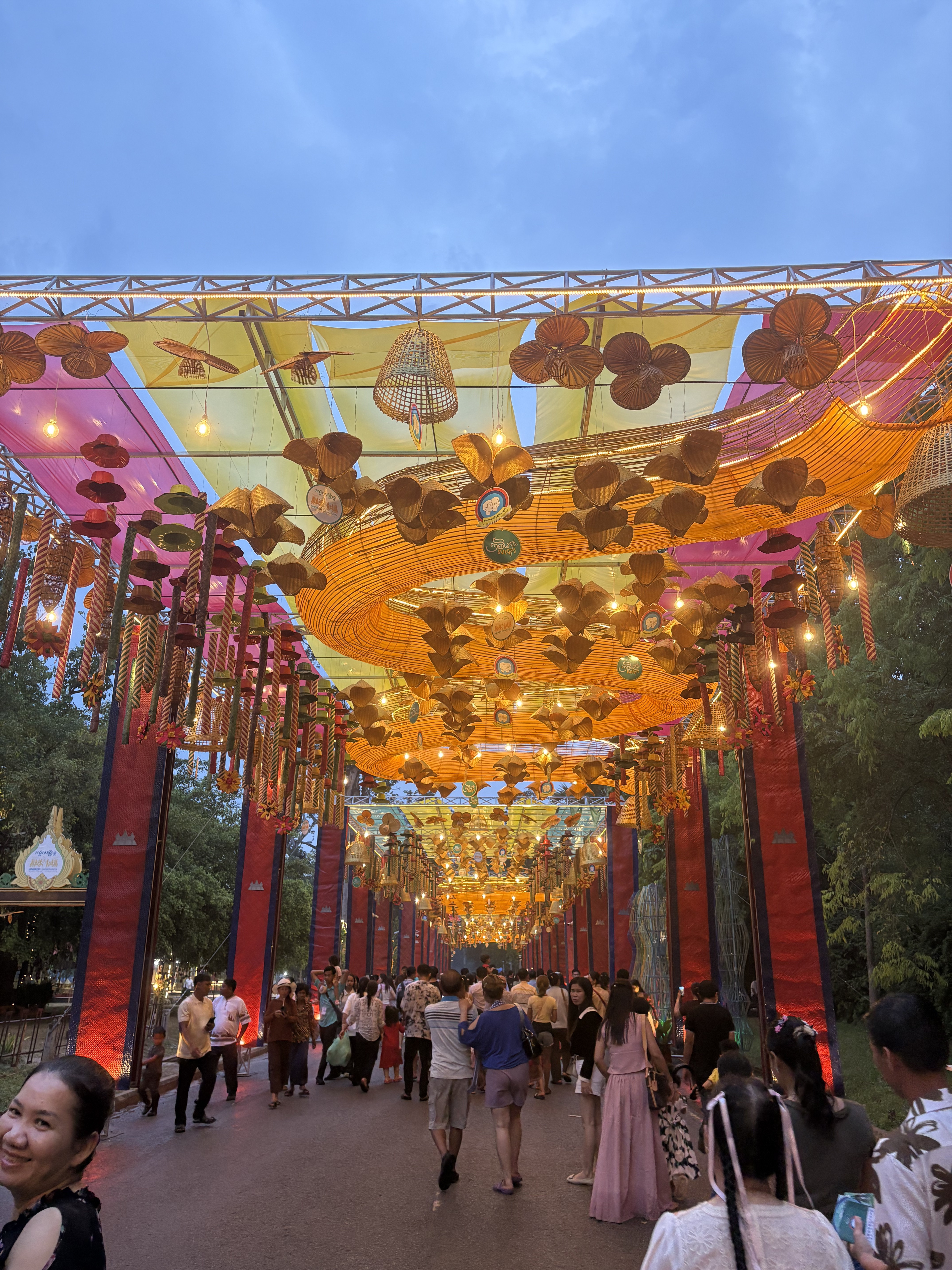
We felt we gave Angkor Archaeological Park a wholehearted crack. While we knew we’d never see it all, we left with a solid grasp of Khmer history and mythology, a vendetta against the Cambodian heat, and really, really sore feet. When we returned to our accommodation that evening, Siem Reap was buzzing with locals and tourists coming together to celebrate the Khmer New Year and the famous Angkor Sankranta Festival (a huge cultural and religious event held in the Angkor Archeological Complex marking the New Year holiday). This meant that every hotel was at capacity, every restaurant full, and every street backed up with traffic for hours. Approximately 800,000 visitors flocked to Siem Reap for the week, including 4,000 foreigners (us)! It was so chaotic, yet so festive, and we felt very lucky to be in Siem Reap for that time. We didn’t want to miss out on the fun, so we showered, grabbed dinner, and headed to a rooftop bar for cocktails. We met some fellow travellers and joined in on karaoke, and ended up getting home at 2:00am…



Genocide Museum, Lotus Farm, and Local Temples
Thanks to Aunty Bec connecting us with her Cambodian tour guide, we booked a tuk-tuk tour to explore some other Siem Reap sights. Needless to say, our 8:00am pick-up by Ratha was rough. We were so. frickin. hungover. (Self-inflicted, of course.) We visited the Siem Reap Genocide Museum, which was deeply confronting, featuring a mass grave, a water well used for executions, and powerful depictions from the Khmer Rouge era. It was hard to digest, especially on an empty stomach. After that, we headed to a lotus farm, where we learned how locals use lotus flowers to make linen and tea. Our last stop was a modern temple, where we were chased by a pack of stray dogs and nearly died–then called it a day. We asked Ratha to drop us off at KFC for a much-needed greasy lunch before heading back to the hotel to sleep all afternoon.
One More Day in Siem Reap
Given Khmer New Year was the next day, we decided to extend our stay in Siem Reap by one more night so we could be included in the New Year’s Eve festivities. This meant we had to move to a shitty hostel for the night, but it was worth it…
At 4:30pm, Ratha picked us up again to take us back to Angkor Archaeological Park to experience Cambodia’s Sankranta Festival. The atmosphere was incredible. Over 500,000 people had gathered to celebrate with parades, lantern floating, Khmer mixed martial arts displays, traditional food stalls, and lively songs and dances. Even the Cambodian prime minister was there! A sudden torrential downpour caught us off guard, drenching everyone and turning the celebrations into a muddy, wet frenzy. So, we weaved our way on the tuk-tuk back through the traffic in Siem Reap, now accompanied by two locals from Phnom Penh (Cambodia’s capital). Pat and I honestly thought we were going to die. We have been in some sketchy situations in Southeast Asia (as you may expect), but never as scary as this tuk-tuk ride.
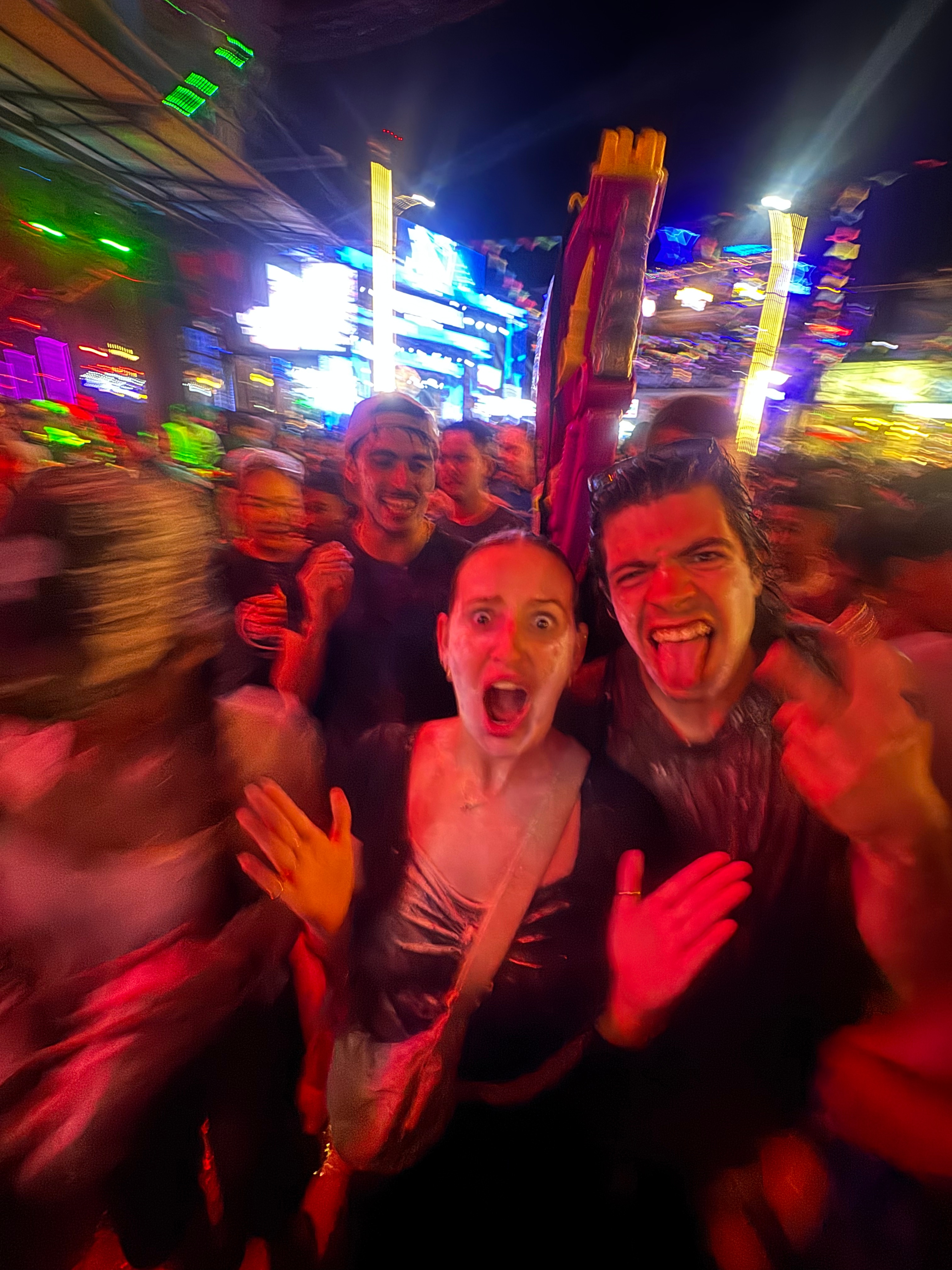
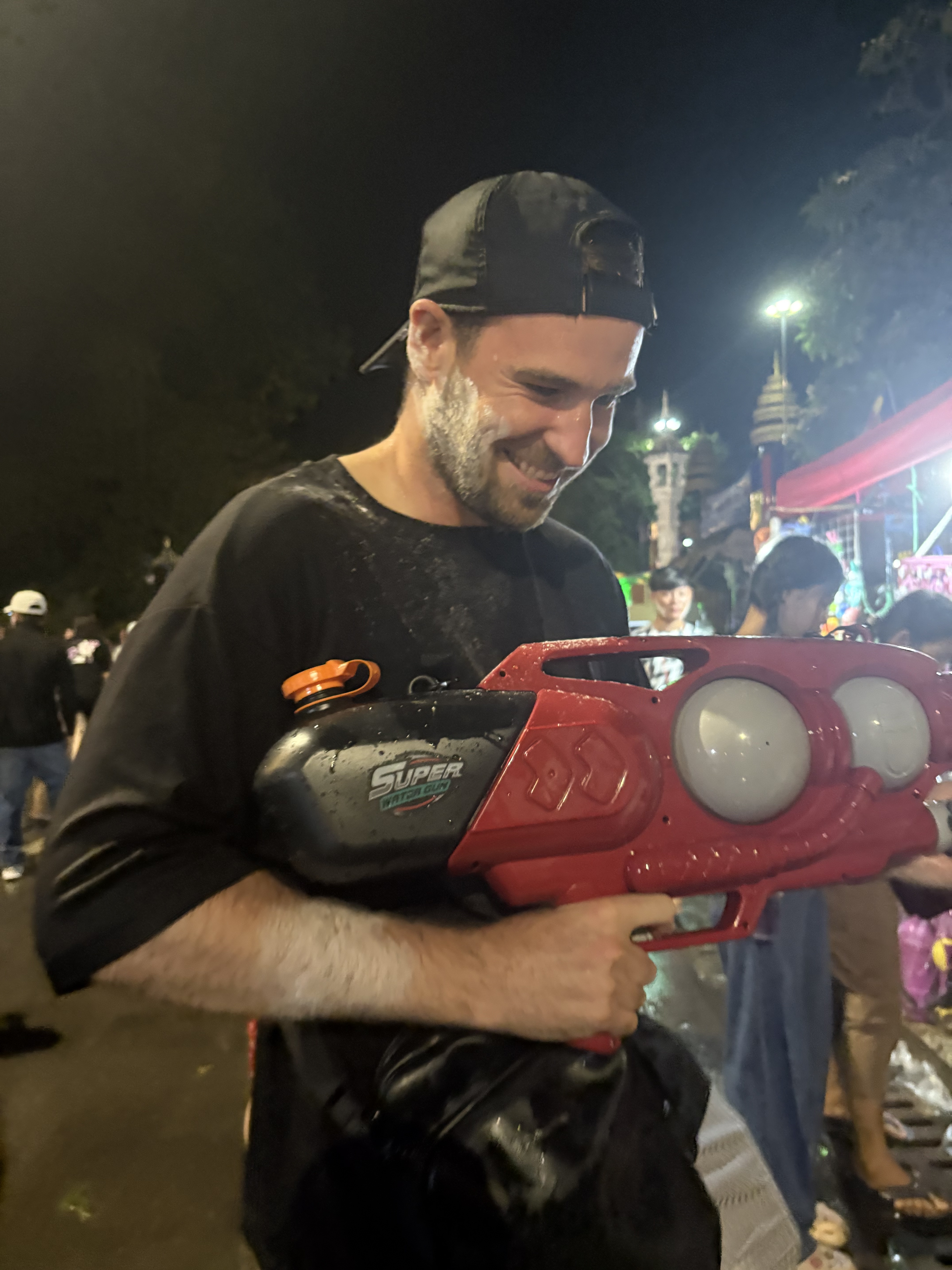
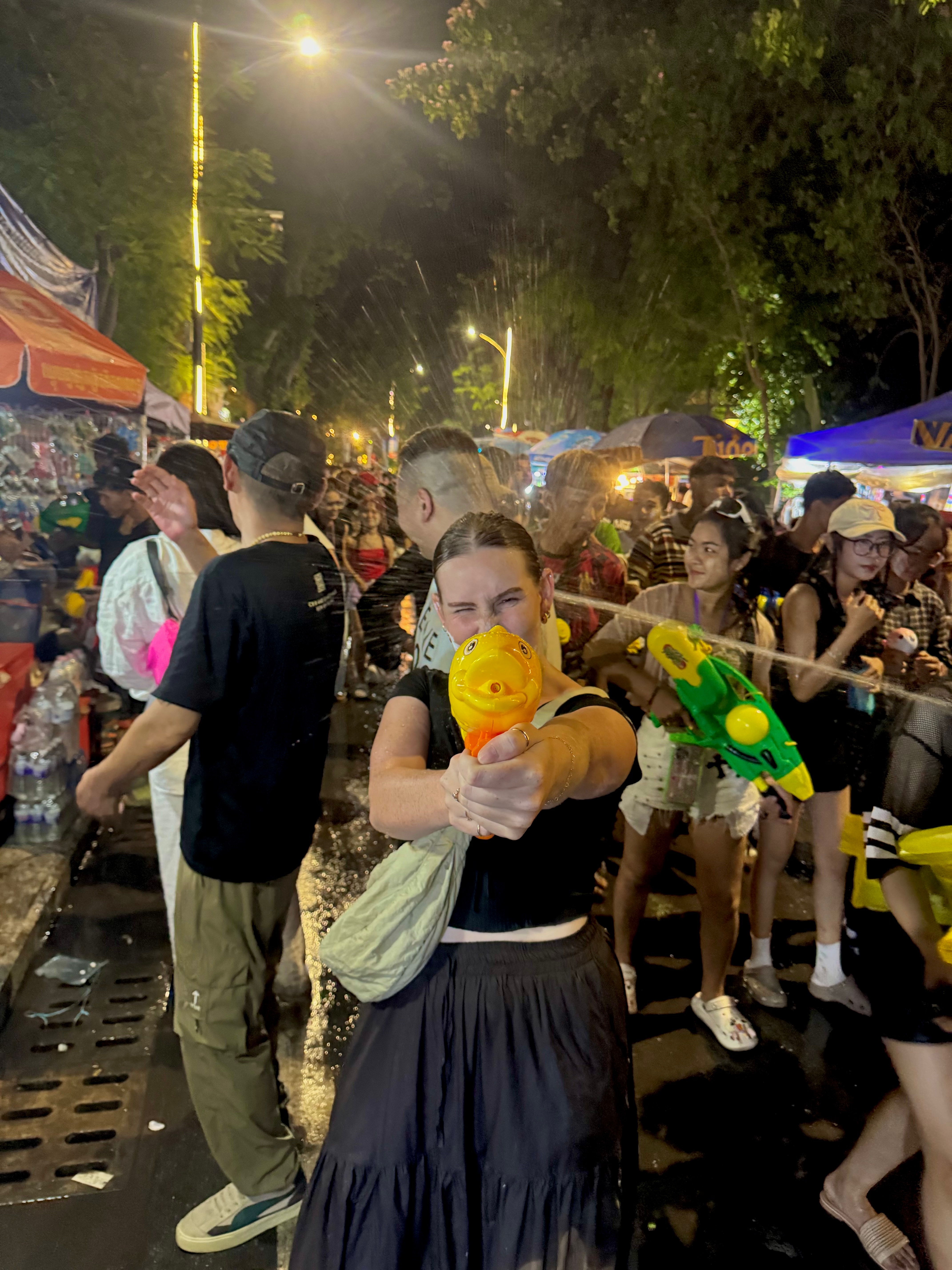
Once we made it back to our hostel pod safely, we headed back into the buzzing Siem Reap town, armed with newly purchased water guns, ready to dive into the famous New Year’s water fights. The streets were alive with splashes, baby powder, laughter, and thousands of people. We moved like sardines, up and down the streets of Siem Reap, shooting anyone and everyone with water, and being drenched in return. We continued to refill our guns until we were soaked to the bone.
Unfortunately, our fun took a very depressing turn when Pat realised his passport had sustained some serious water damage. We stood in the hostel bathroom, trying to dry it with a hairdryer, before admitting that we may need to take a trip to the Embassy.


Phnom Penh
Fortunately, we were heading to Phnom Penh! Unfortunately, it was the Easter and ANZAC Day public holidays in Australia, and the Embassy was closed for a few more days… So, our visit for a replacement passport was slightly delayed. We took a bus from Siem Reap to Phnom Penh, which took seven very uncomfortable hours. We arrived in the early evening in the middle of Phnom Penh’s Khmer New Year’s water fights. As all the roads were closed and full of thousands of people, we trudged through the crowds with all our belongings on our backs, dodging streams of water and slaps of baby powder. We had experienced a very significant drop in spirits after the passport fiasco, and just wanted to get to our hotel and hide from the world. So, we did just that. Although, we did venture out to Hummus House for delicious pitas for dinner.
Tuol Sleng Genocide Museum and the Killing Fields
We slept in, and still unable to visit the Embassy, decided to spend the day visiting the Tuol Sleng Genocide Museum, also known as Security Prison 21 (S-21). Once a high school, it was transformed by the Khmer Rouge into a secret detention and torture centre between 1976 and 1979. We purchased the audio guide, which provided a detailed account of the atrocities committed there. Over 18,000 people were imprisoned in S-21, many of whom were later sent to the Killing Fields for execution.
We explored each of the four main buildings with heavy hearts, peering into tiny cells made of brick or wood, seeing rusted bed frames and shackles still in place, and standing before the haunting black-and-white portraits of victims taken upon their arrival. The silence of the museum was deafening. At the end of the visit, we had the privilege of meeting Norng Chan Phal and his brother, two of the twelve known survivors of Tuol Sleng. Barely children at the time, they now spend their days sharing their stories with visitors. It was so moving and humbling. I felt a little silly crying as I bought Mr Phal’s book, but I was just too overwhelmed not to. Needing some time to process, we walked to a nearby Chinese restaurant and shared crispy pork and rice for lunch, which offered some relief after such an emotionally taxing morning.
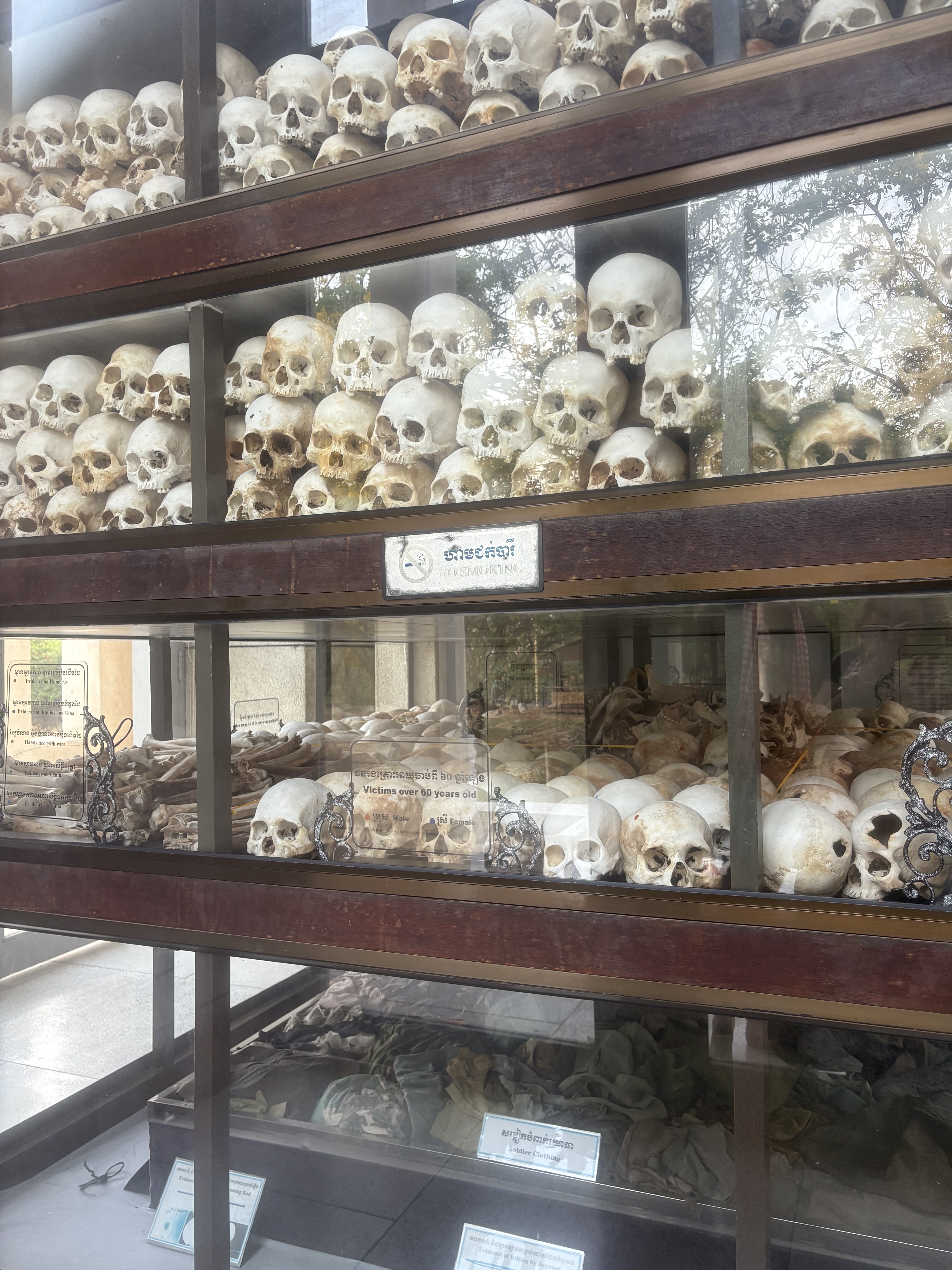
In the afternoon, we visited the Choeung Ek Genocidal Center, also known as the Killing Fields, where thousands of Tuol Sleng’s prisoners were executed. We again opted for the audio guide, which was beautifully done. It was quiet, reflective, and heartbreaking. As we walked among the mass graves and memorial sites, the stillness of the trees, the flutter of butterflies, and the distant Khmer New Year laughter from a nearby neighbourhood starkly contrasted the violence that once occurred there. One of the most disturbing parts of the site was the Killing Tree, where executioners murdered babies by striking them against its trunk. The nearby stupa, filled with more than 5,000 human skulls, also stands as a chilling yet powerful memorial to the lives unnecessarily lost. Visiting both Tuol Sleng and Choeung Ek in one day was overwhelming, but it felt important to bear witness, to remember, and to honour the victims of this horrific chapter in Cambodian history. It is something we recommend everyone does once in their lifetime.




Finally… The Embassy
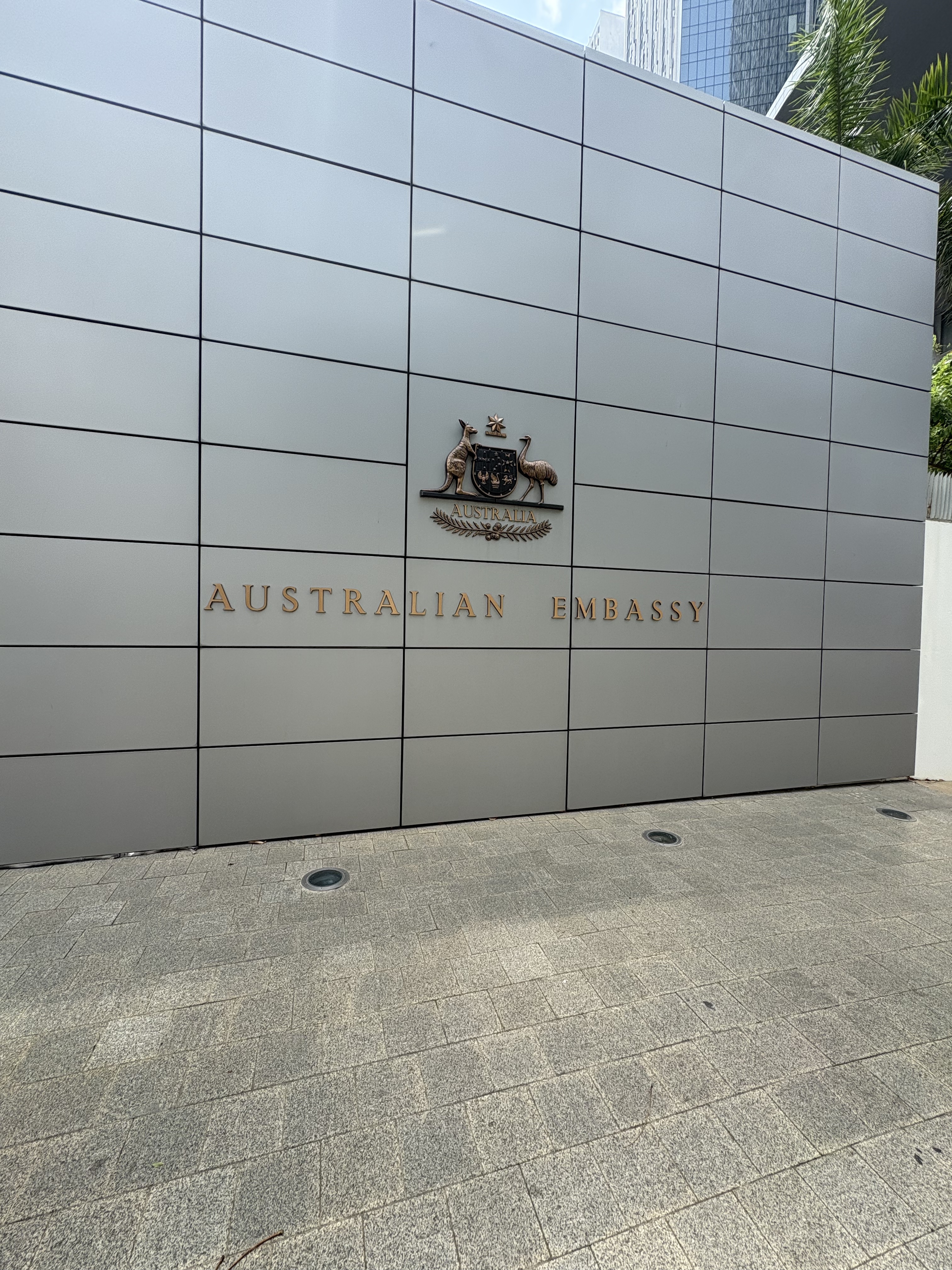
It was finally time to visit the beloved Embassy. Neither Pat nor I had ever had to do such a thing before, so it felt like stepping into unfamiliar adult territory, handing over all our belongings at the gate, walking through security, and waiting to be called up for advice. Long story short: Pat had to apply for a brand-new passport, and we were told it could take up to six (yes, six!) weeks to process.
However, before we could even submit the application, we needed new ID photos. So off we went, hailing a tuk-tuk to find a nearby photo shop. Pat’s picture was quickly done–it was a one shot wonder. We returned to the Embassy, submitted the application, and then… It hit us. We were going to be in Cambodia for a lot longer than planned. We spent the rest of the day in a café, laptop open, wi-fi connected, trying to rejig our travel itinerary for the next few weeks. Flights needed to be changed, new plans made, different accommodation booked, and timelines extended. It was frustrating, but once we accepted our new reality, we realised it was an opportunity to see more of Cambodia than we’d originally planned.
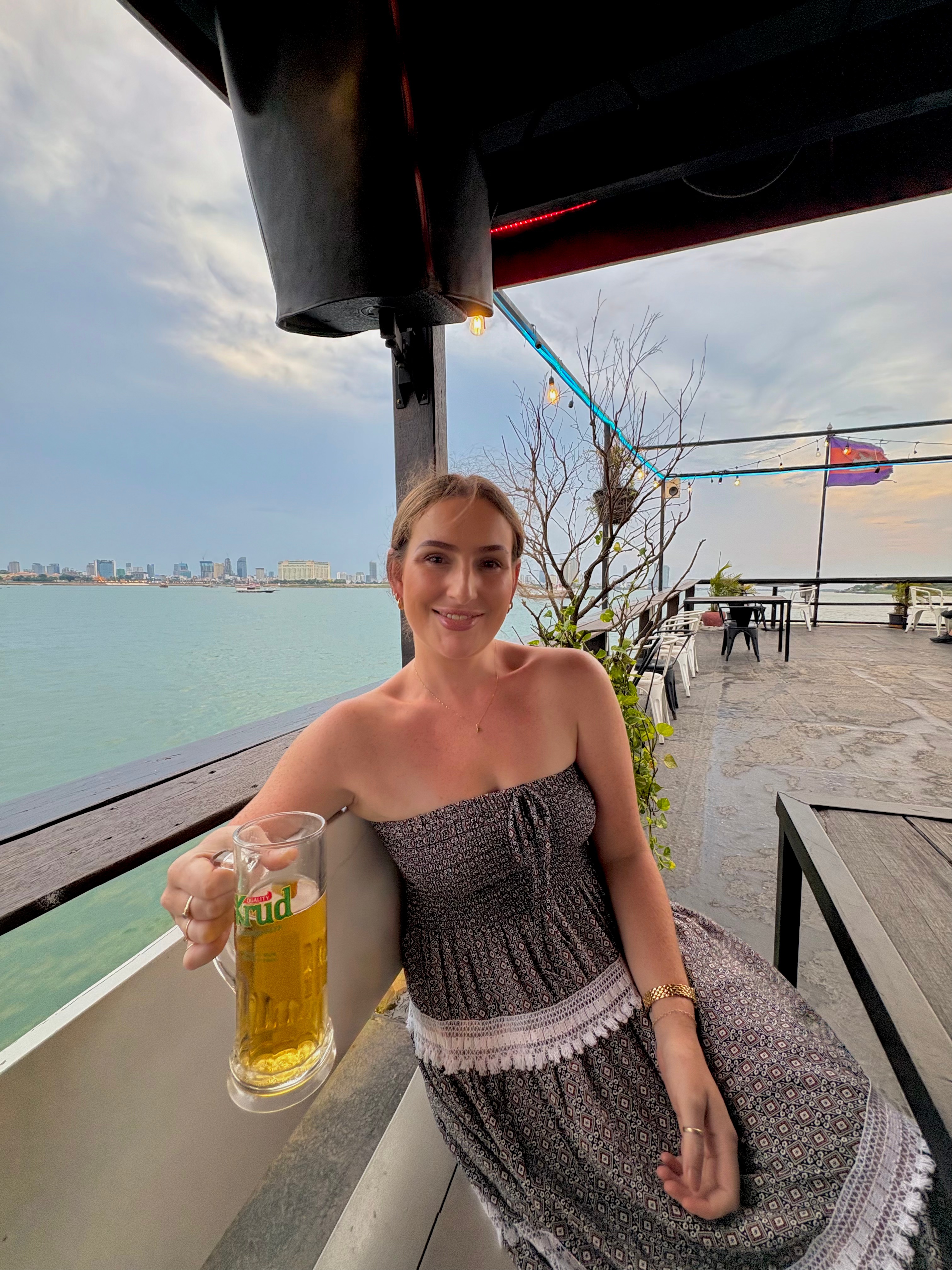
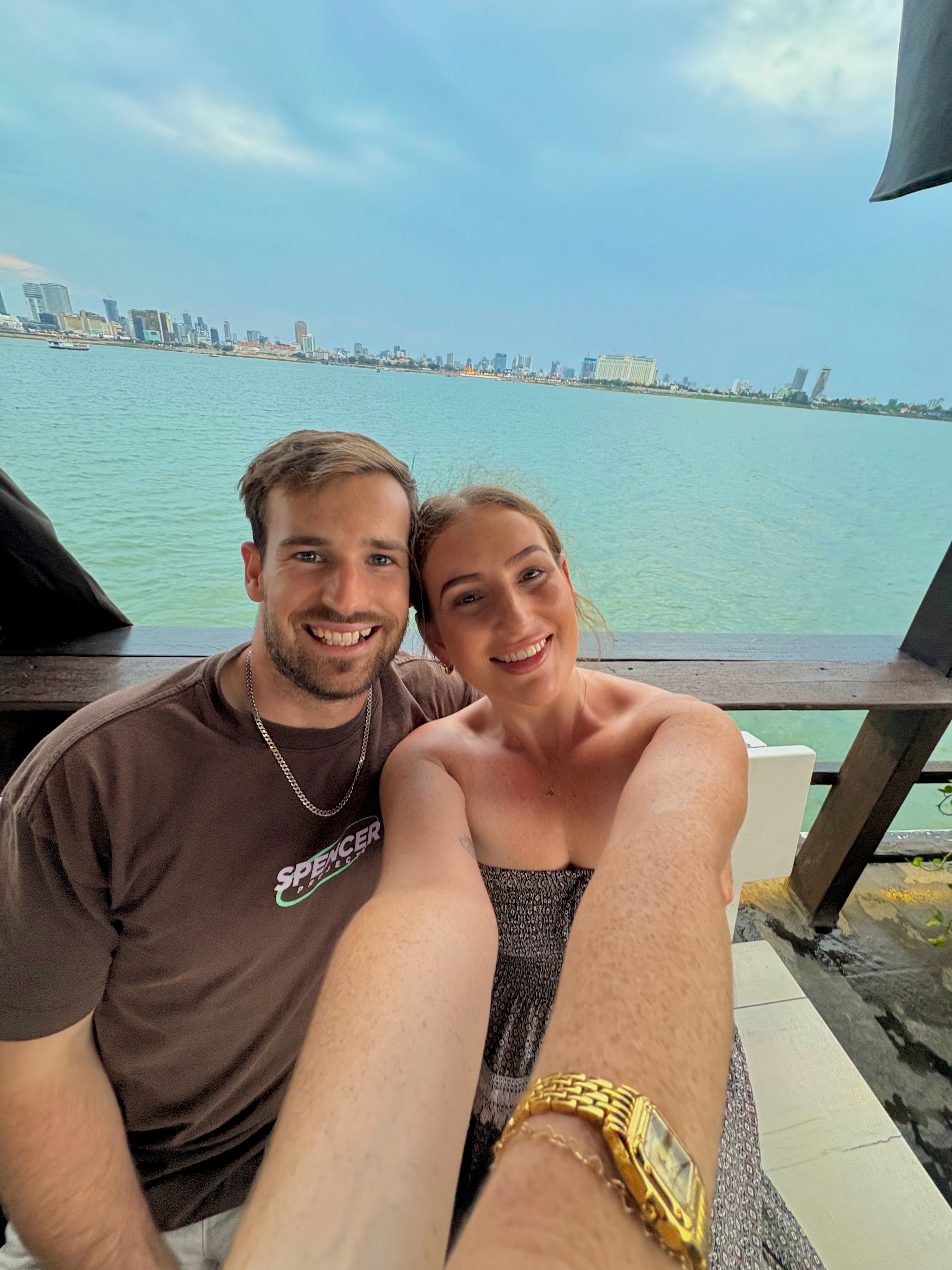
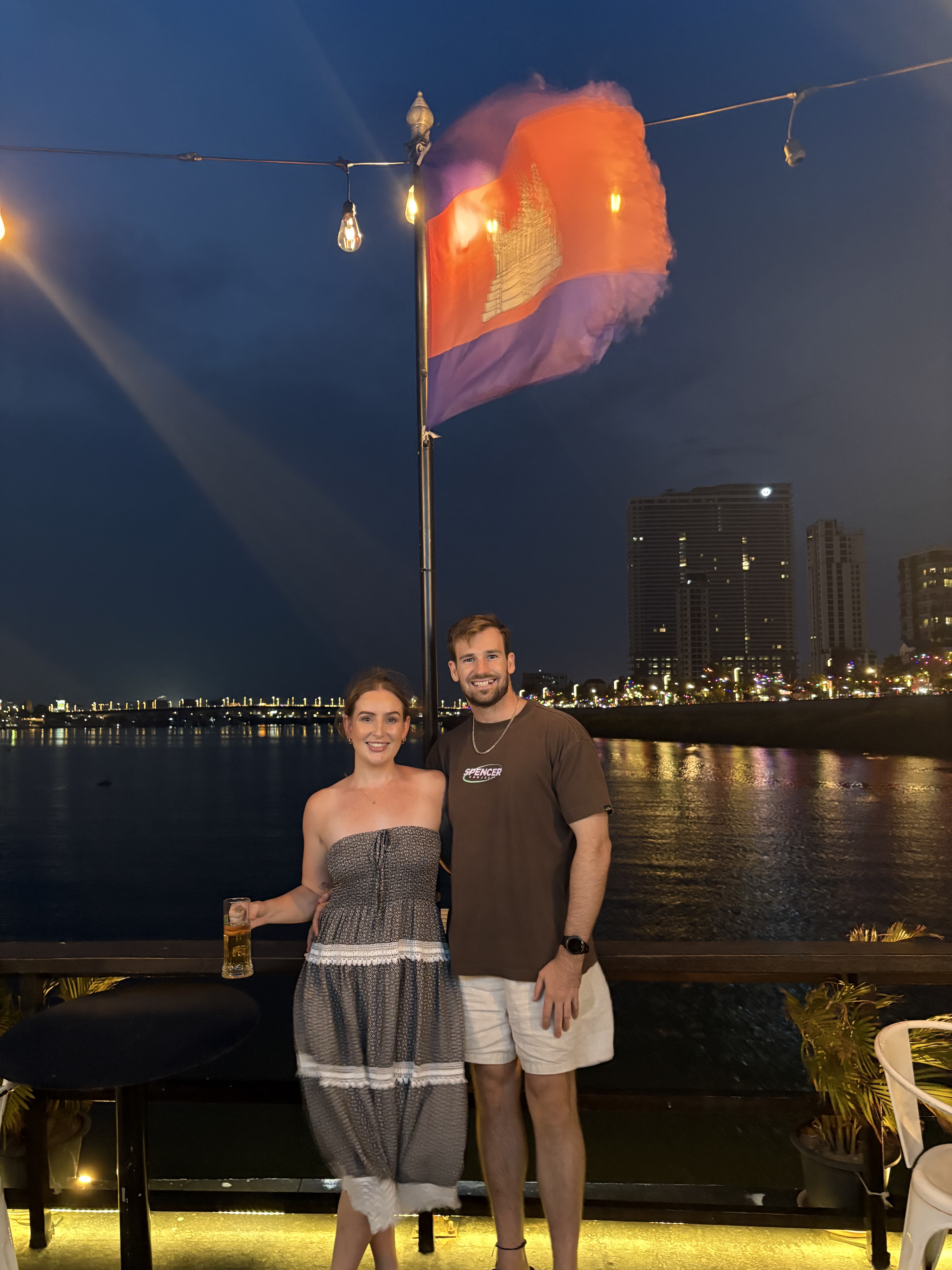
We ended our first stint in Phnom Penh with a cruise down the Mekong River with bottomless drinks. It was beautiful, although very empty given the summer season (both the river and the boat).

Kampot
Kampot, in Cambodia’s south, felt like a world away from the north, and almost incomparable. We spent nearly six days there, and to be honest, it was one of my least favourite stops of the trip. It was quiet, humid, dirty, and while it had its moments, a lot of it was underwhelming. So, instead of dragging you through the ins and outs of each day, I’ll just hit you with the highlights.
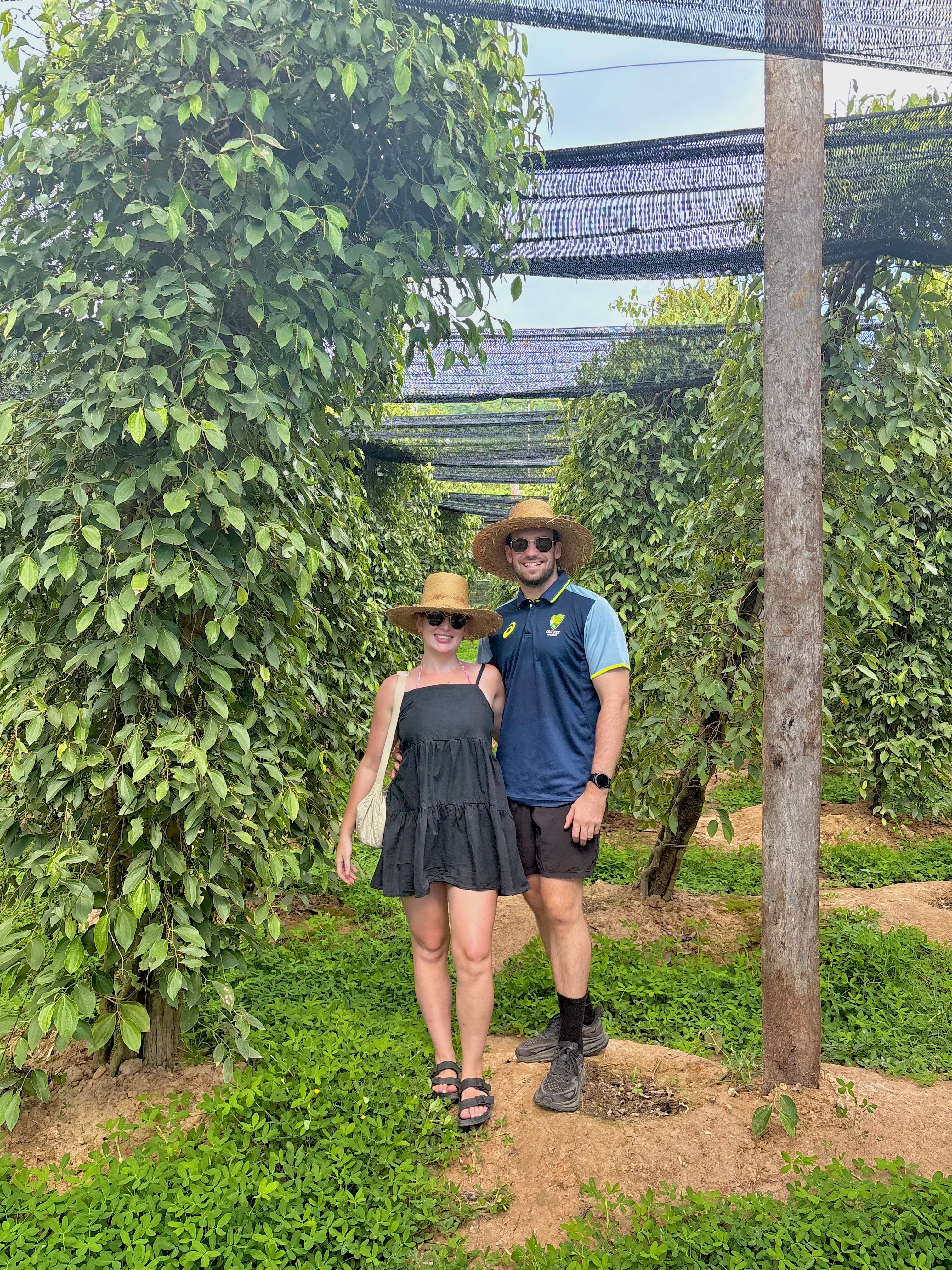
We hired a motorbike and took a trip out to La Plantation Pepper Farm, which Kampot is famous for. Kampot produces some of the world’s most sought-after pepper, especially prized in French cuisine. It was interesting to learn how the different types of pepper (black, red, white, and green) are all harvested from the same plant and how flavour changes depending on the age and drying process of the peppercorns. That said, it was sweltering. It was so humid that I could barely concentrate on what the guide was saying. I was too busy trying not to melt into the gravel.
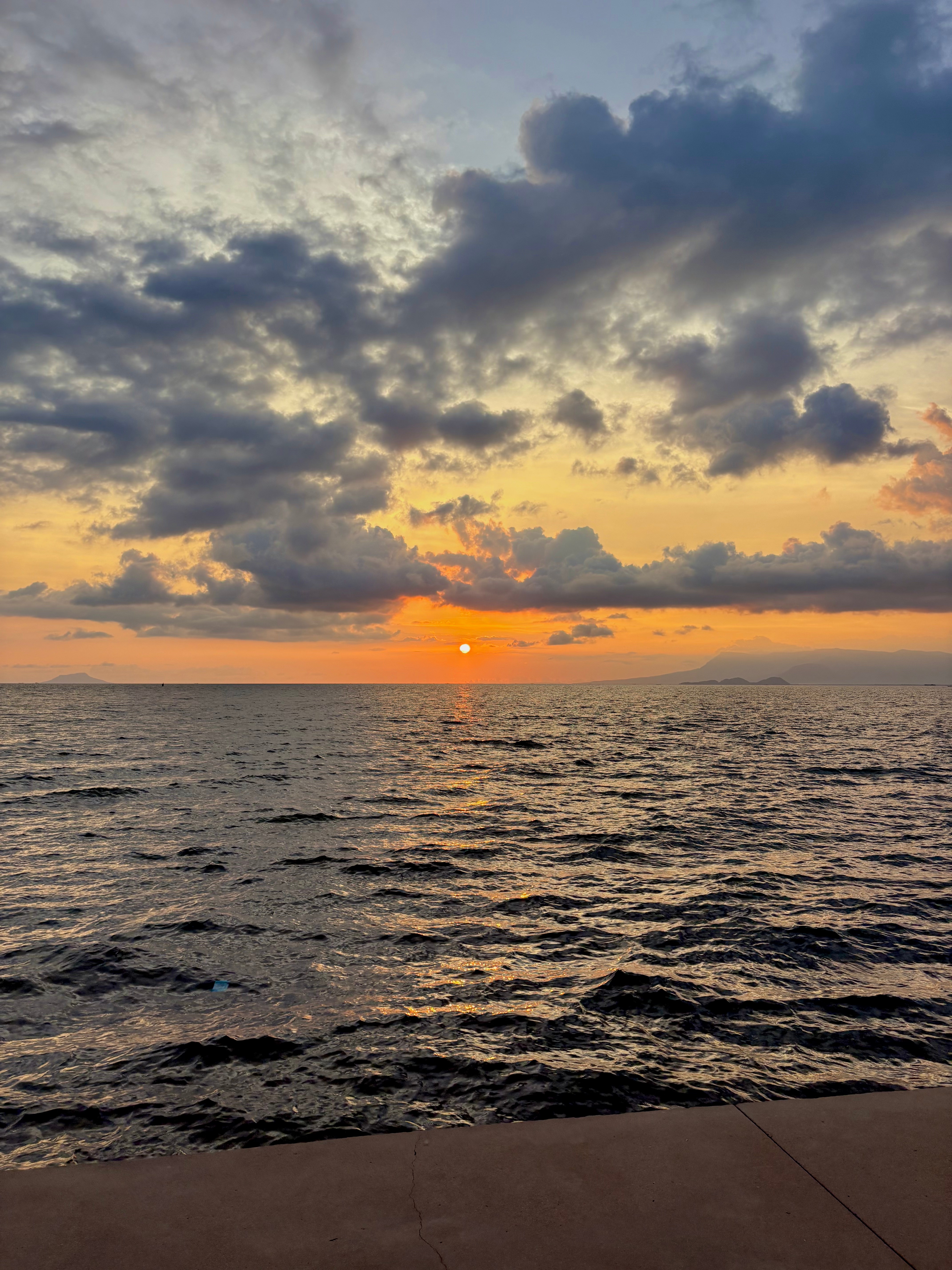
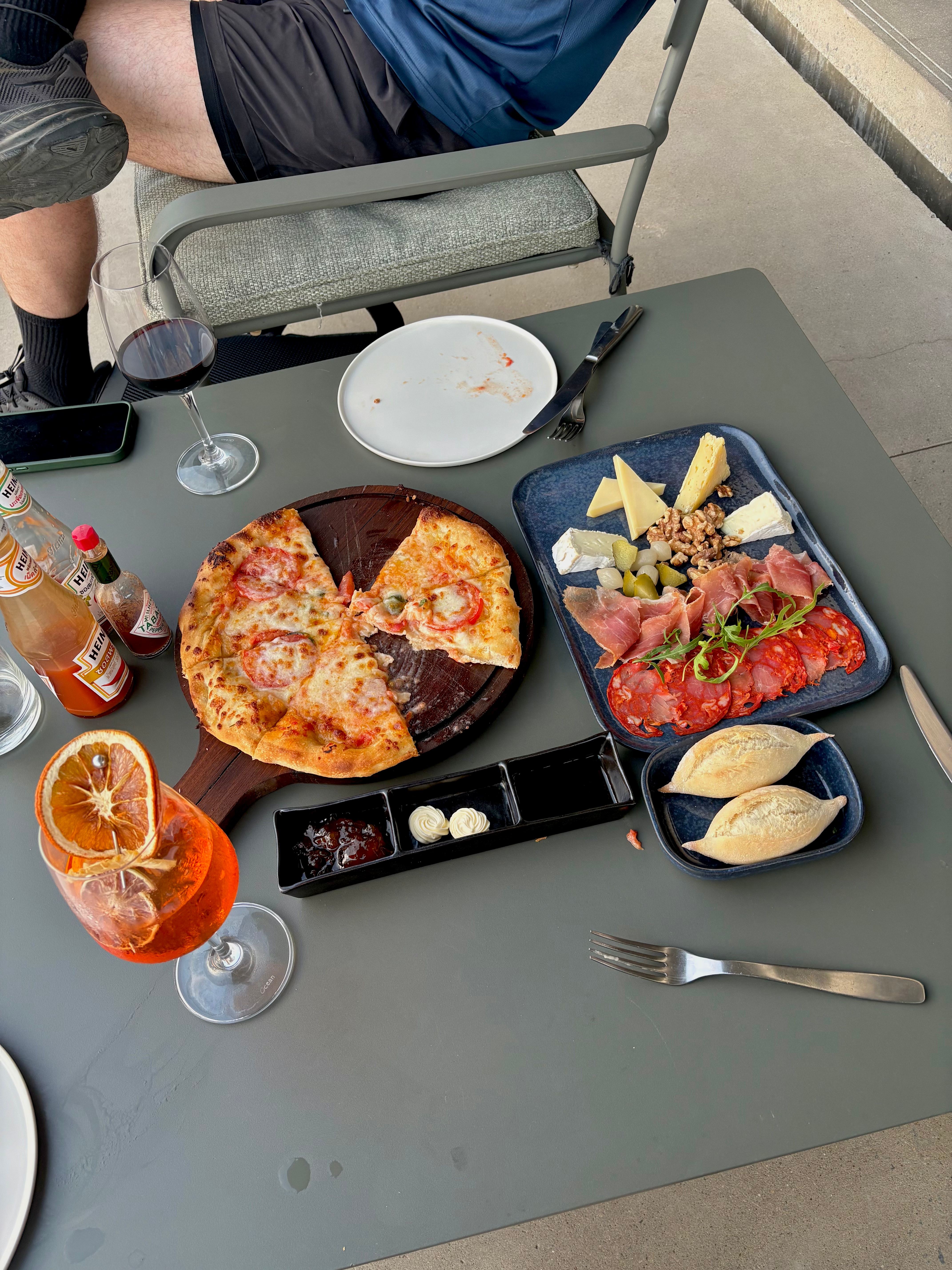
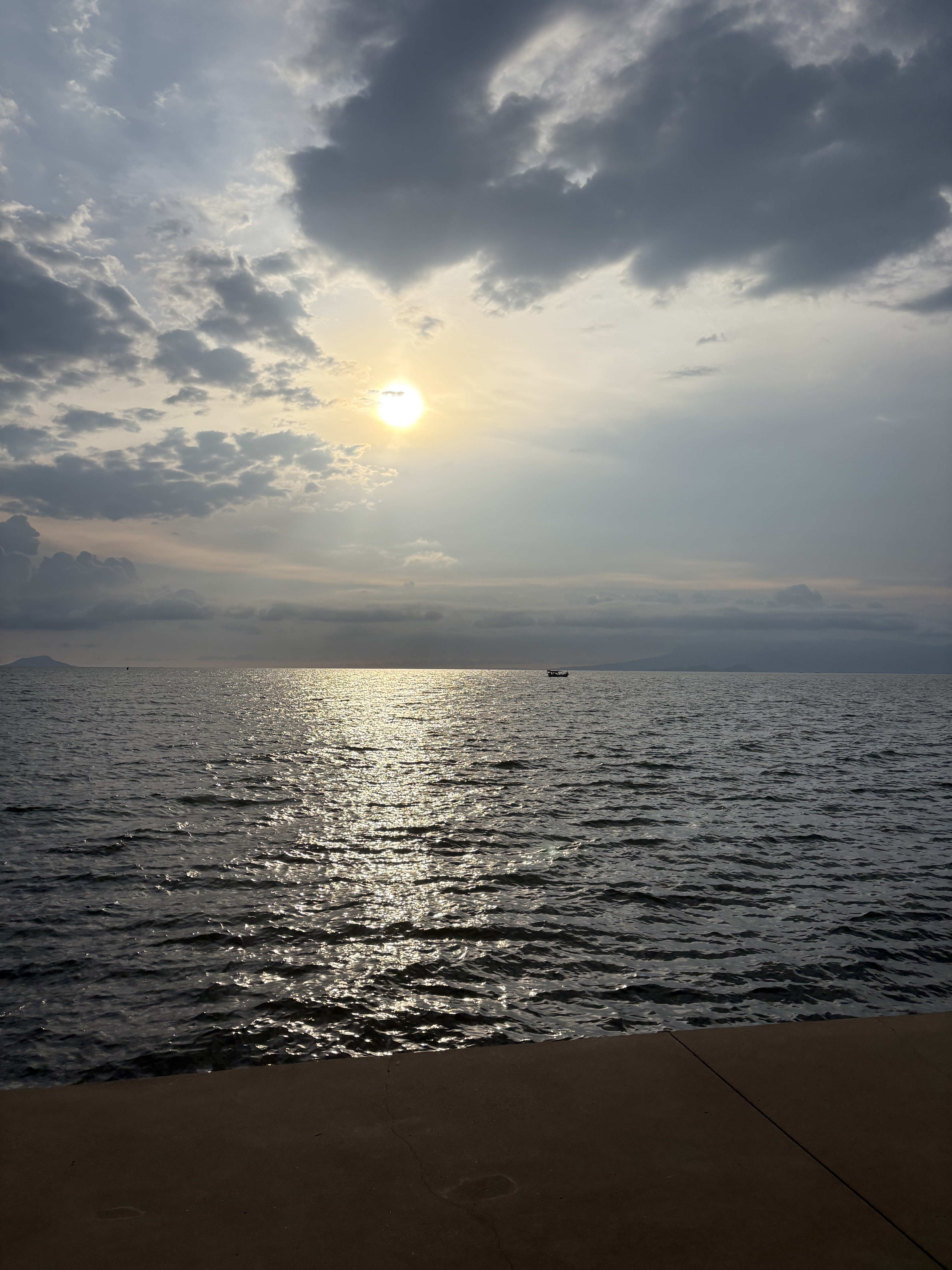
One day, we took a day trip to Kep, a coastal town that used to be part of Kampot province. We were hoping for a relaxing beach day, but were disappointed to find murky grey water and a polluted beach. Instead, we stopped at Kep West, a modern seaside restaurant and bar, where we treated ourselves to pizza and a round of drinks while we watched the sunset and enjoyed the live band. The 40-minute ride back to our hotel in the dark was terrifying… Cambodian roads are no joke. Despite that, we made a second trip back to Kep a few days later to visit the Kep National Park trail, which winds through the jungle and offers a beautiful lookout over Cambodia’s southern coast. We’d hoped to grab coffee at the little café in the park, but everything was shut due to the low season.
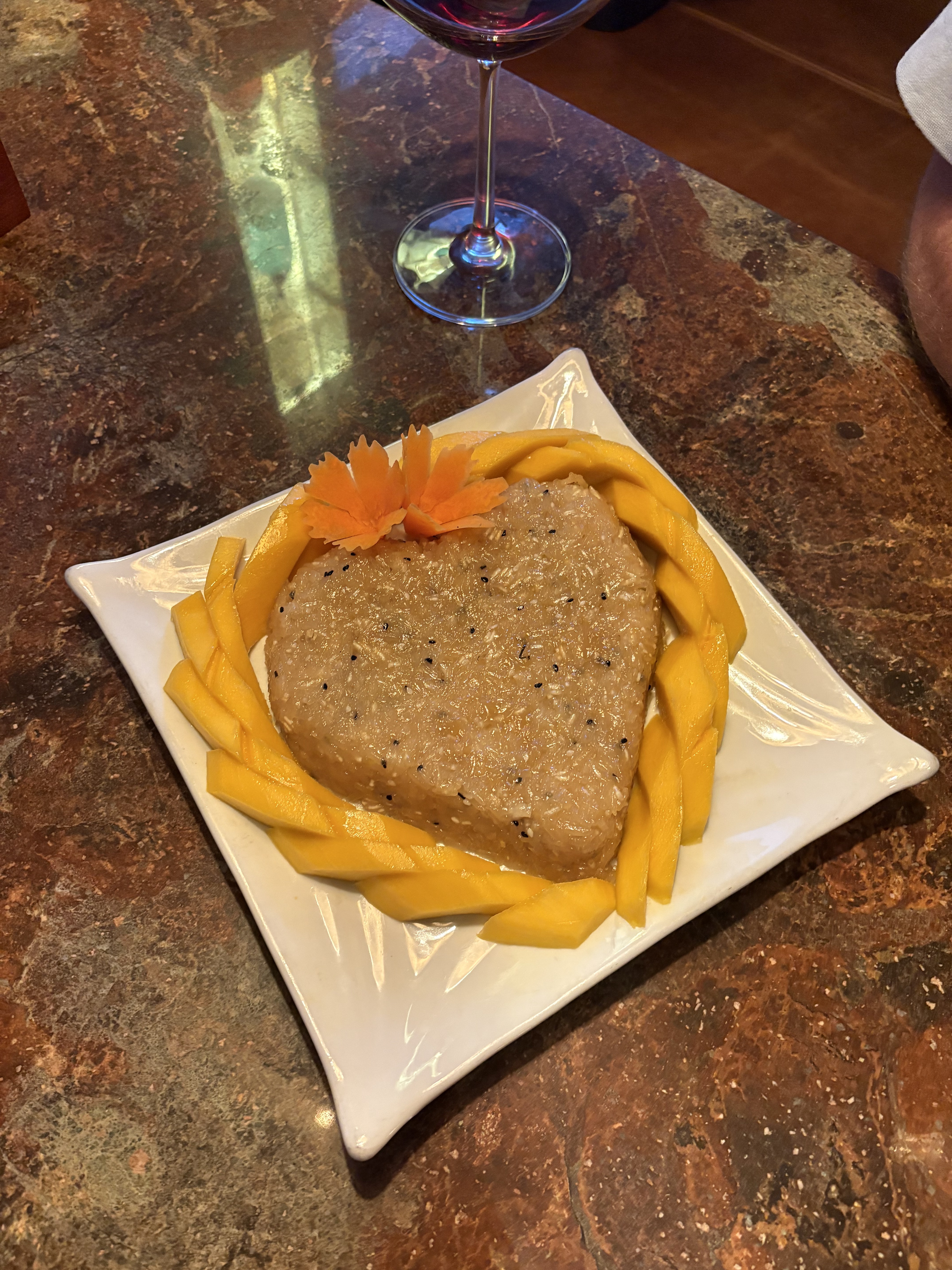
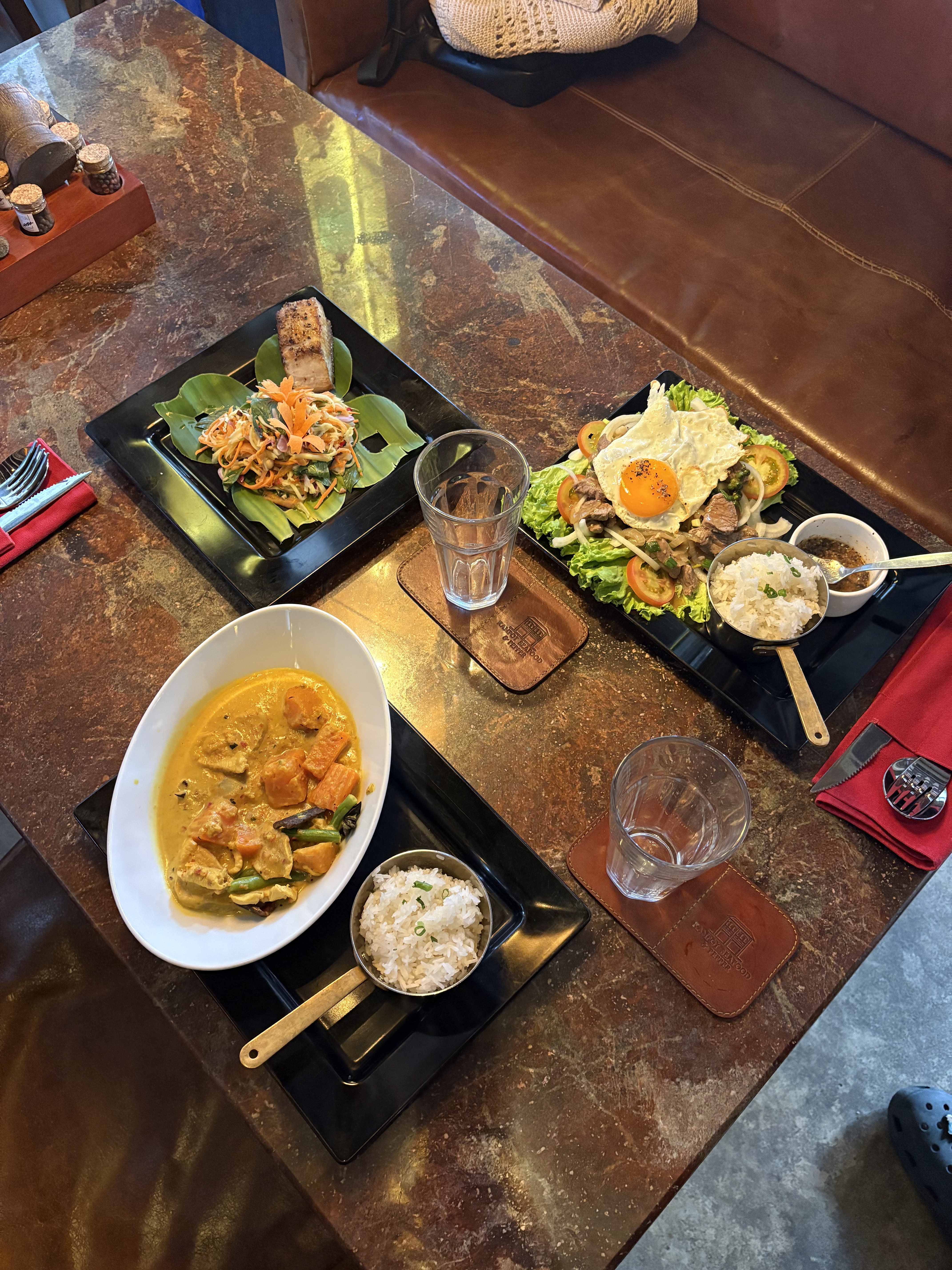
One of the best things we did in Kampot was join a Khmer cooking class at Kampot Seafood and Pepper. We highly recommend this experience. It ended up just being the two of us in the class (a recurring theme in low season), and we had such a fun time. We made fried spring rolls, green mango salad, Khmer curry, beef lok lak (a traditional dish served with rice, egg and pepper-lime sauce), and mango sticky rice. We were in a food coma for hours, but it was definitely worth it.
We also visited Kampot’s salt fields, which are another regional specialty due to the area’s natural salt deposits. We were hoping to watch farmers collecting the salt crystals, but because it had rained overnight, the fields were empty. Instead, we stopped at Khleang Ambel, a small café on a salt farm, where we tried the local salt coffee. Later that day, Pat picked up some ingredients for a DIY charcuterie board from an Italian deli. Kampot has a strong French and European influence, which definitely shows in its food scene. We grabbed a bottle of French wine, olives, cheeses and cured meats, and spent the evening by our hotel pool enjoying our little feast until the mosquitoes chased us inside.
You could probably leave Kampot off your bucket list (no offence to the Kampot-lovers). That said, it does have a great gym, which we ended up frequenting daily for just $1 a session. Silver linings, right?





Koh Rong Island
The next day, we were off to Koh Rong, an island off Cambodia’s southern coast, loved by many expats. What we didn’t realise is just how rough the journey would be. We were crammed into a small van and driven cross-country on roads that barely existed, riddled with potholes the entire way. Even if you wanted to sleep, you were too busy trying not to headbut the window.
To reach the island, you have to take a ferry, which is my least favourite mode of transport. We’d booked a week of accommodation while waiting on news about Pat’s passport, and honestly, this week was tough. I felt really flat. I was missing home, my family, my friends, my Coby, my routine… I think people assume long-term travel is always rainbows and butterflies, and it is… most of the time. But sometimes, it’s okay to admit you’re struggling and to take things slowly. Still, I reminded myself just how lucky I was to be overseas with Pat, having experiences so many people only dream of.
We didn’t do a lot in Koh Rong. It’s very much a party island, full of older expats and backpackers. Nothing opens until 11:00am because no one sleeps until 3:00am. The island also experiences blackouts every few hours, which leaves you sweating in the dark. Like Kampot, there weren’t many standout moments, but here are the best bits…
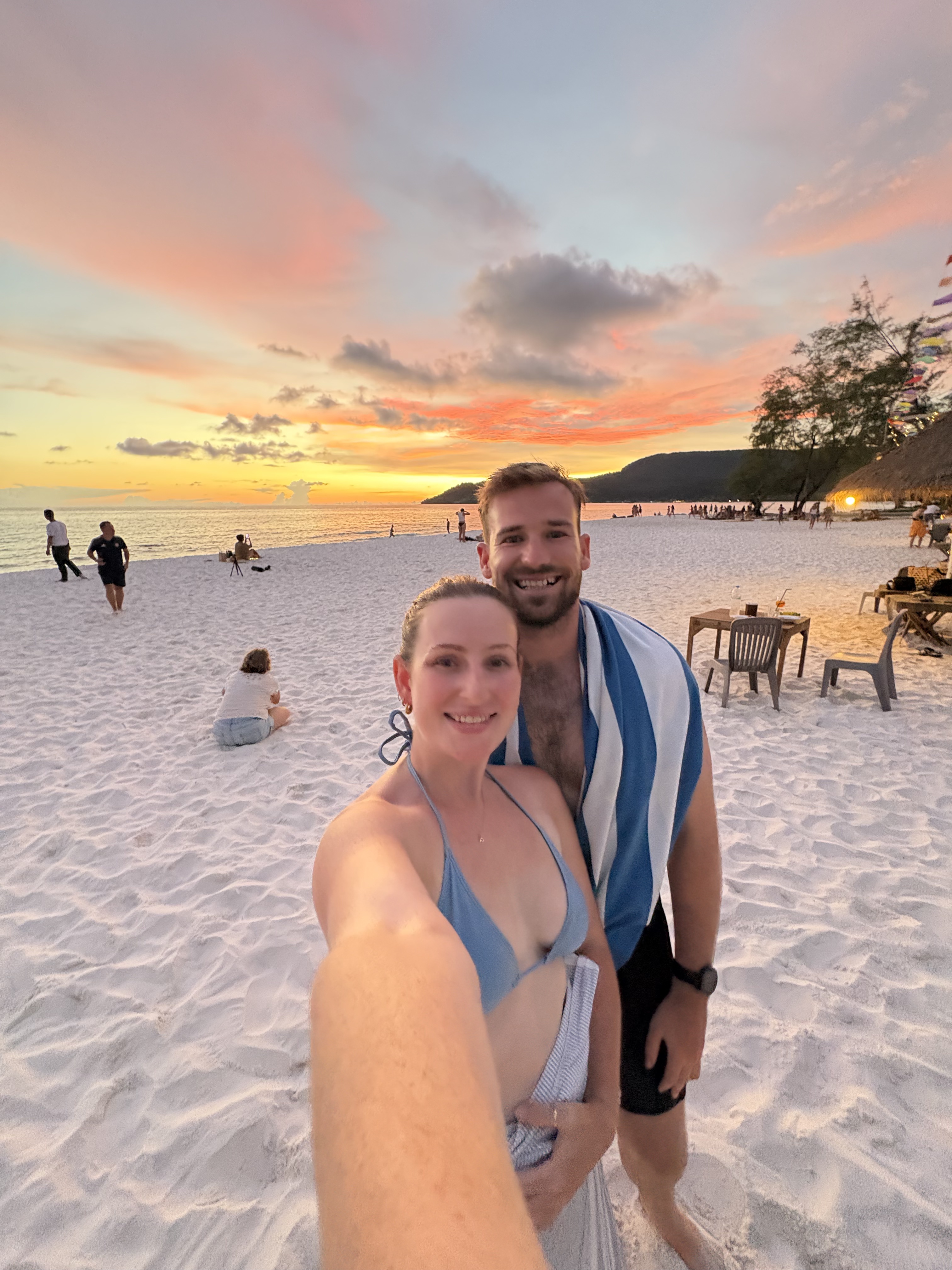
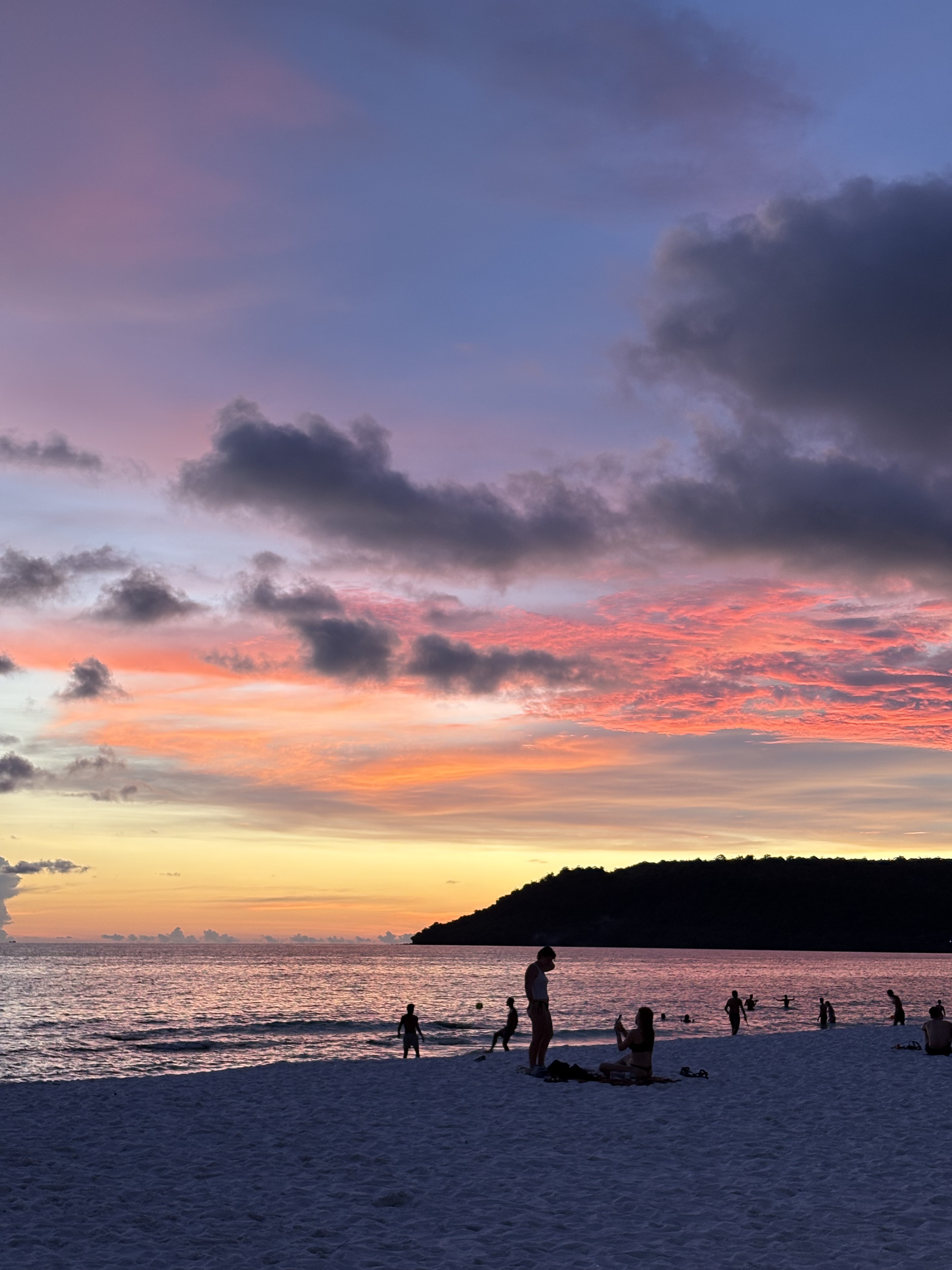
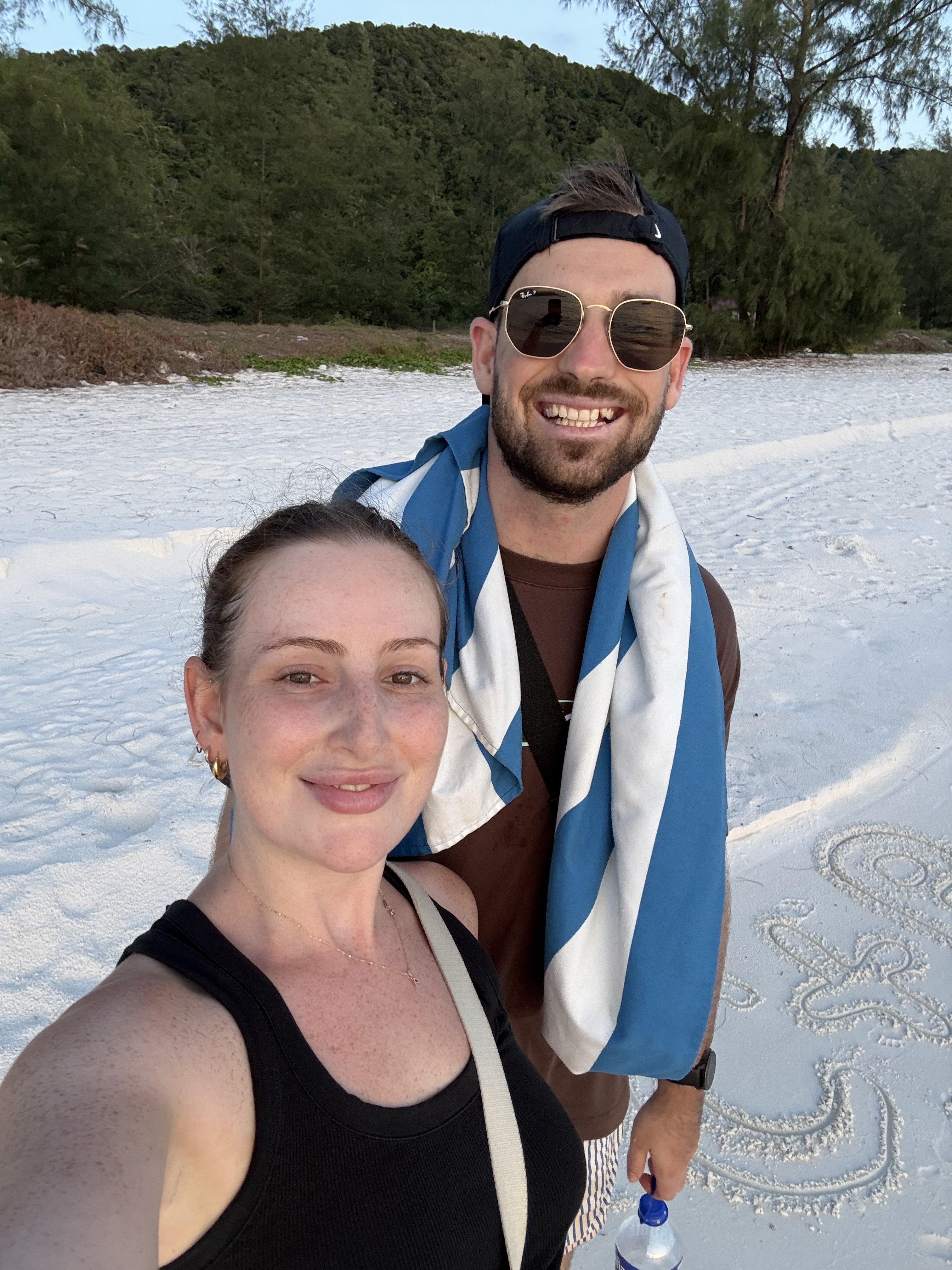
We met Lucy and Keeley, a beautiful couple also travelling the world. We ended up staying out late at a beach club, talking and laughing the night away. We caught some of the most beautiful sunsets here, often heading down to the water for a beach walk.
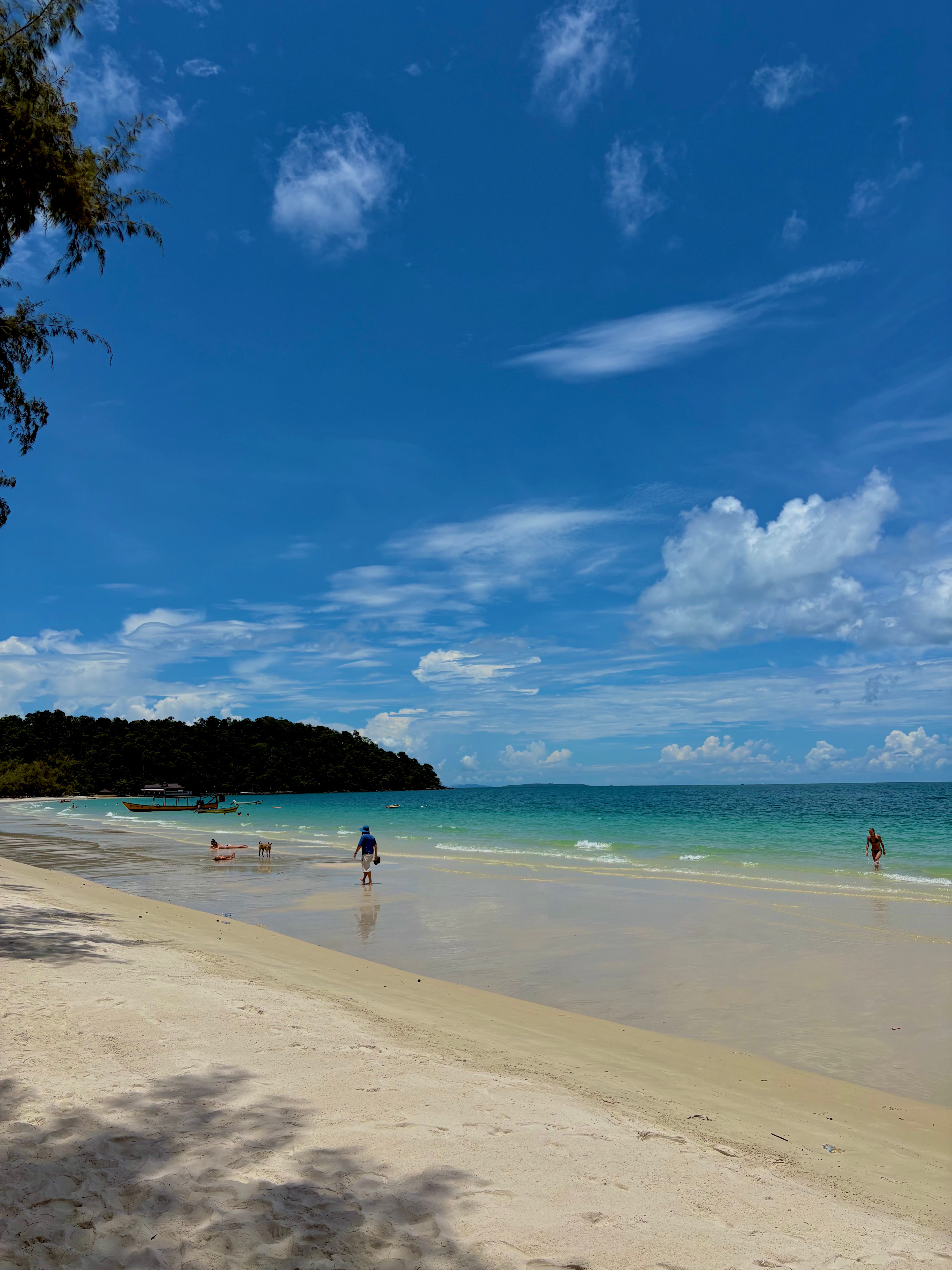
On another day, we visited Long Set Beach, which has flawless white sand and the clearest water. It was stunning and definitely the island’s highlight. We also went to Nestival, a weekly party hosted by Nest Beach Club, known for DJs and a big backpacker crowd. It poured with rain though, so we bailed early and went home soaked.
One of our favourite spots was Ma Baker, a small local bakery with the most incredible pastries and baked goods. Seriously, it was the saving grace of our days. We had so many cinnamon scrolls, brownies, and pizza pockets. Luckily, there was a gym on the island.
One evening, we watched a fire show on the beach, which was performed by a backpacker rather than the locals, but it was still somewhat entertaining… I guess? Earlier that night, we went for a sunset walk on the western side of Koh Rong. The sky was fairy floss pink and periwinkle, and for the first time in a few days, my brain felt calm.
After squeezing everything out of Koh Rong, we eventually packed up and returned to Phnom Penh to hopefully collect a passport.


Phnom Penh (again)
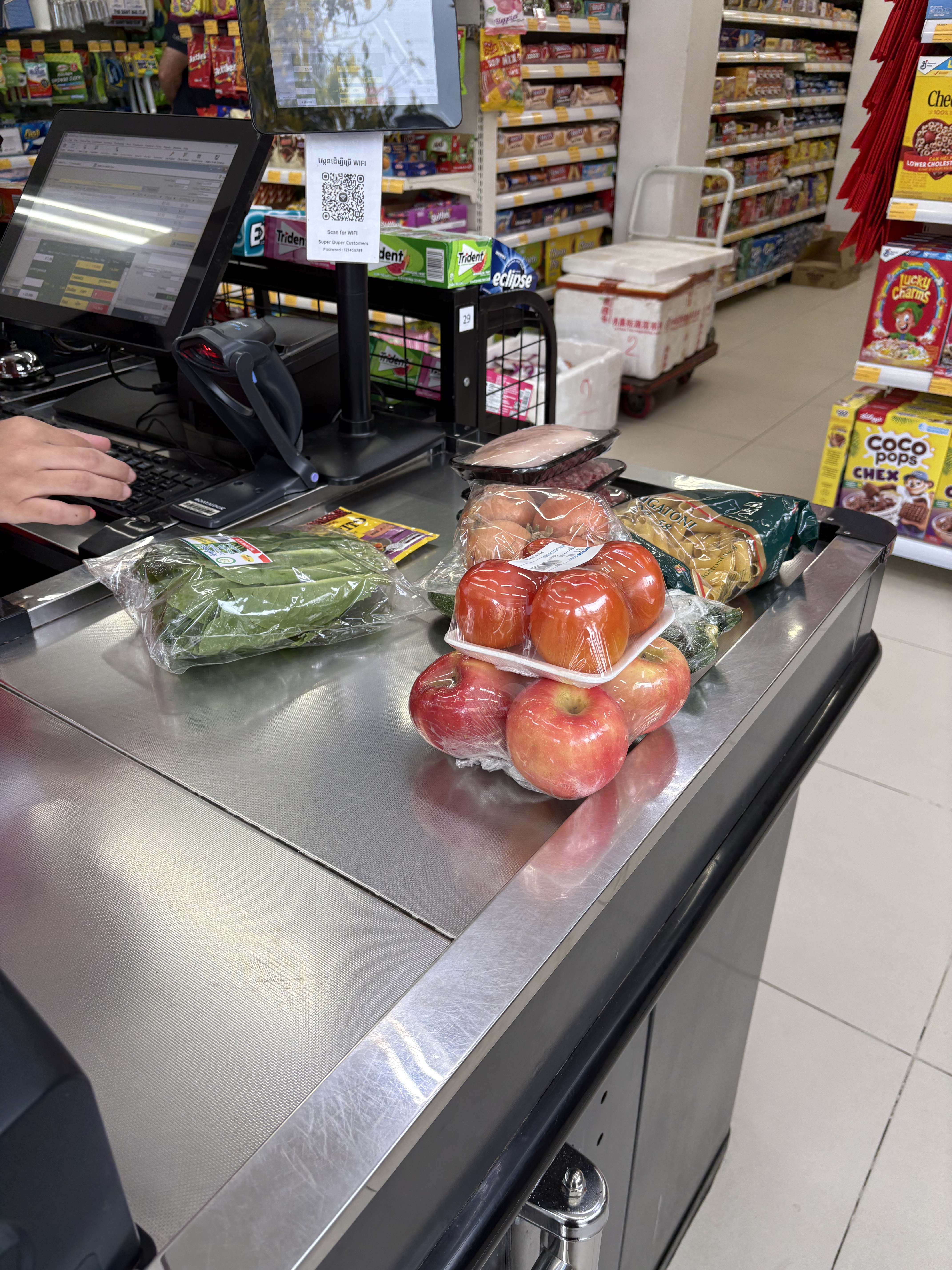
Back to Phnom Penh we went for, well… We weren’t quite sure how long. We booked ourselves a self-contained apartment for a week, complete with a kitchen, laundry, bathroom, balcony, and, most importantly, air conditioning. In an effort to feel somewhat in routine, we decided to cook our own meals. After a big grocery shop, we settled into a week of admin, exercise, catching up on washing, and ticking off all the Harry Potter movies (yes, we finished them all!) Our meals for the week were simple but delicious: beef burritos, aglio e olio pasta, chicken breast with roasted potatoes and veggies, and zucchini pasta. It felt really nice to have some familiar food again.
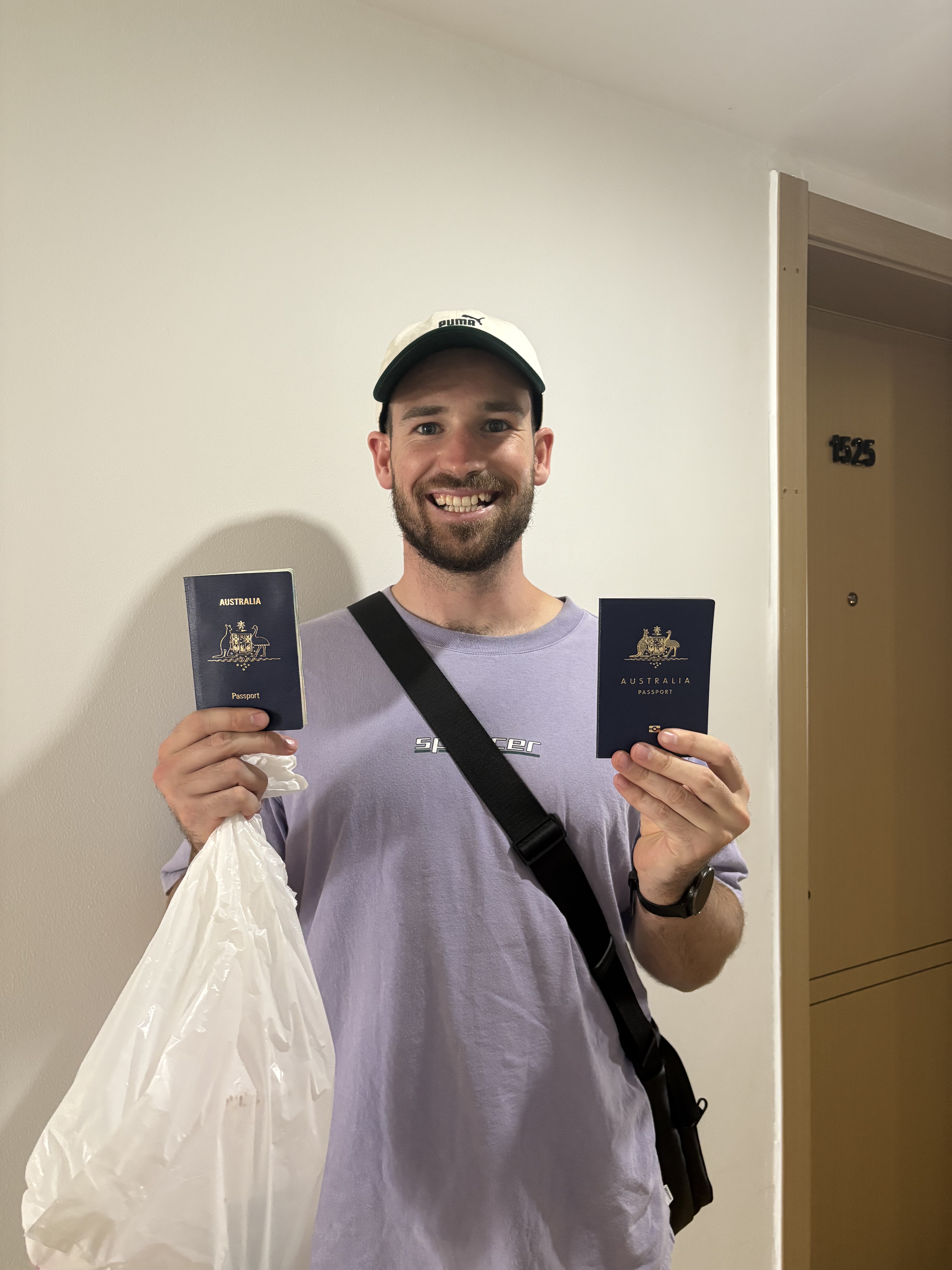
Collecting Pat’s new passport was easy. It was ready in no time, and we were so relieved. But, the exit visa… Not so easy. As Pat’s original passport was damaged, the visa that had been issued with that passport became void. It meant Pat had to apply for an exit visa with his new passport to legally leave the country, which is totally reasonable. Except in Cambodia, the only way to do this is by physically going to the Immigration Office every day for three business days. This wouldn’t have been too bad if the office was nearby, but it wasn’t. We ended up spending more money on Ubers to and from immigration than on the visa itself. ANYWAY. After what felt like endless back-and-forth trips, and an extra ten days in Phnom Penh, we finally had everything sorted.
Next stop: Vietnam!!!


 Cassandra's Travel Blog
Leave a reply to radiantpatrolf596f84c55 Cancel reply